Operators, hotels, travel apps and marketplaces increasingly want to offer a ride inside another product. There are three ways to do it, and the right one depends on how much control and engineering time you have.
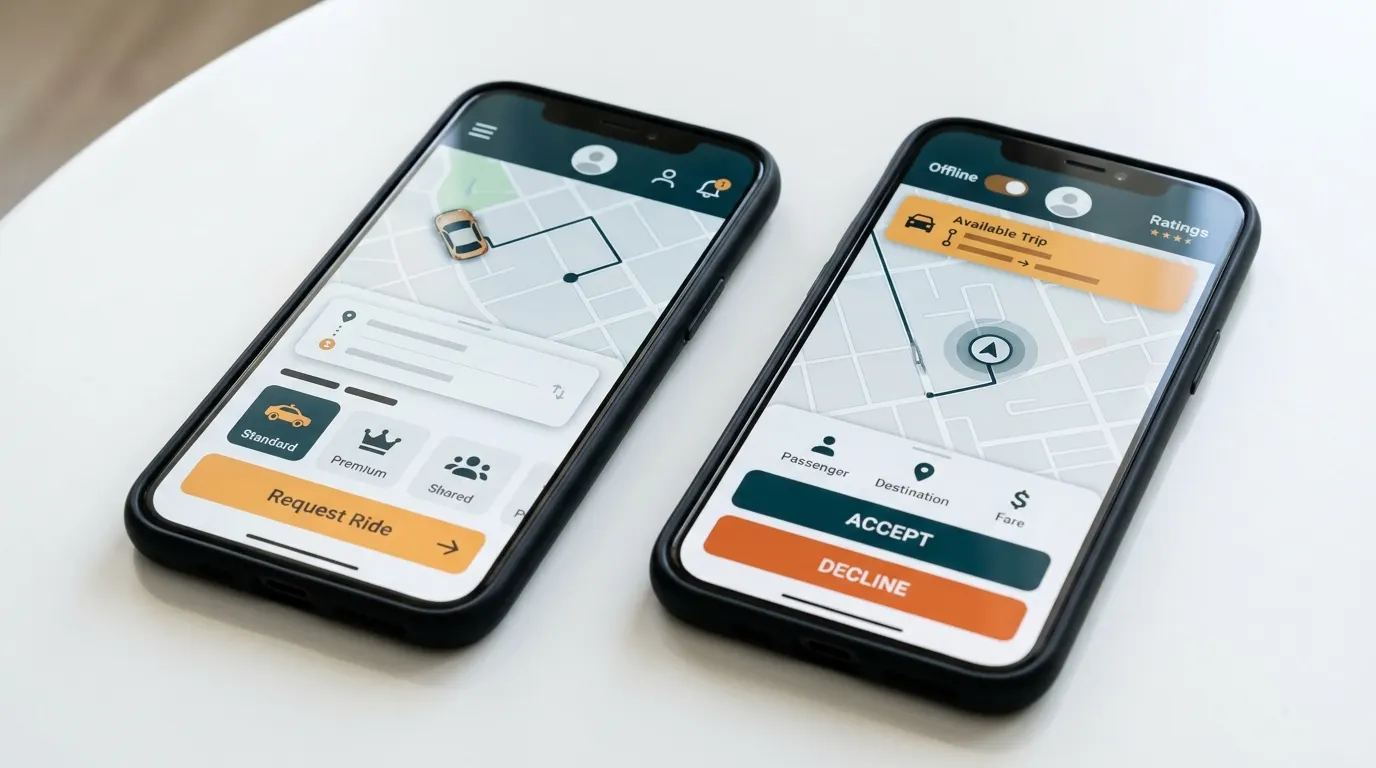
What are the ways to embed ride booking?
| Approach | Engineering effort | Control | Best for |
|---|---|---|---|
| Embedded booking page or widget | Low | Low to medium | Hotels, venues, content sites |
| REST API | Medium | High | Partner apps, OTAs, marketplaces |
| Native SDK | Low to medium, if one exists for your platform | Medium | Mobile apps on supported platforms |
| Full white-label app | Low | Branding only | Operators launching their own app |
Ask each vendor which of these they actually provide. Taxi Web Design offers an embeddable booking flow, a white-label app and a REST API; it does not claim a native mobile SDK.
What should a taxi booking API include?
- Quotes: a price for pickup, drop-off, time and vehicle class.
- Create booking: with an idempotency key so a retry does not create a duplicate.
- Status and cancel: to keep your app in sync.
- Webhooks: driver assigned, on the way, trip completed, signed so you can verify them.
- Authentication: OAuth 2.0 with scoped keys, and IP allow-listing where needed.
- Sandbox: test keys with simulated dispatch before you go live.
- Limits: published rate limits and a path to raise them.
Details of the endpoints are on the API documentation page.
How do I show a fare breakdown with tolls and fees?
The quote response must return separate fields: base fare, distance or zone price, tolls, fees and tax. If the API returns only a total, you cannot show a breakdown. Driver earnings are different data and not all platforms expose them, so ask before you promise it to your users. See dynamic pricing and fare transparency.
How do I choose a white-label provider?
| Question | Why it matters |
|---|---|
| What is branded: name, logo, colours, domain, app-store listing? | Partial branding looks like a reseller |
| Who publishes the app and owns the listing? | Affects control if you leave |
| How are updates shipped? | Avoid being stuck on an old version |
| Monthly fee, setup fee and any booking commission? | Zero commission changes the maths at volume |
| Can I test with my own routes before paying? | A sandbox or a guided demo |
More on this in our white-label taxi app guide.
What should I ask before I commit?
- Is there an OpenAPI specification I can read now?
- What are the rate limits and how are webhooks retried?
- Are sandbox and live keys separate?
- What happens to my data and bookings if I leave?
Test the API with sandbox keys and your own routes
Taxi Web Design is dispatch, booking and branded-app software for taxi, limo and chauffeur operators: web plans from $399 setup plus $10 a month, app dispatch from $499 setup plus $149 a month, and zero booking commission. There is no free trial; instead you get a guided live demo and a sandbox to test with your own routes.