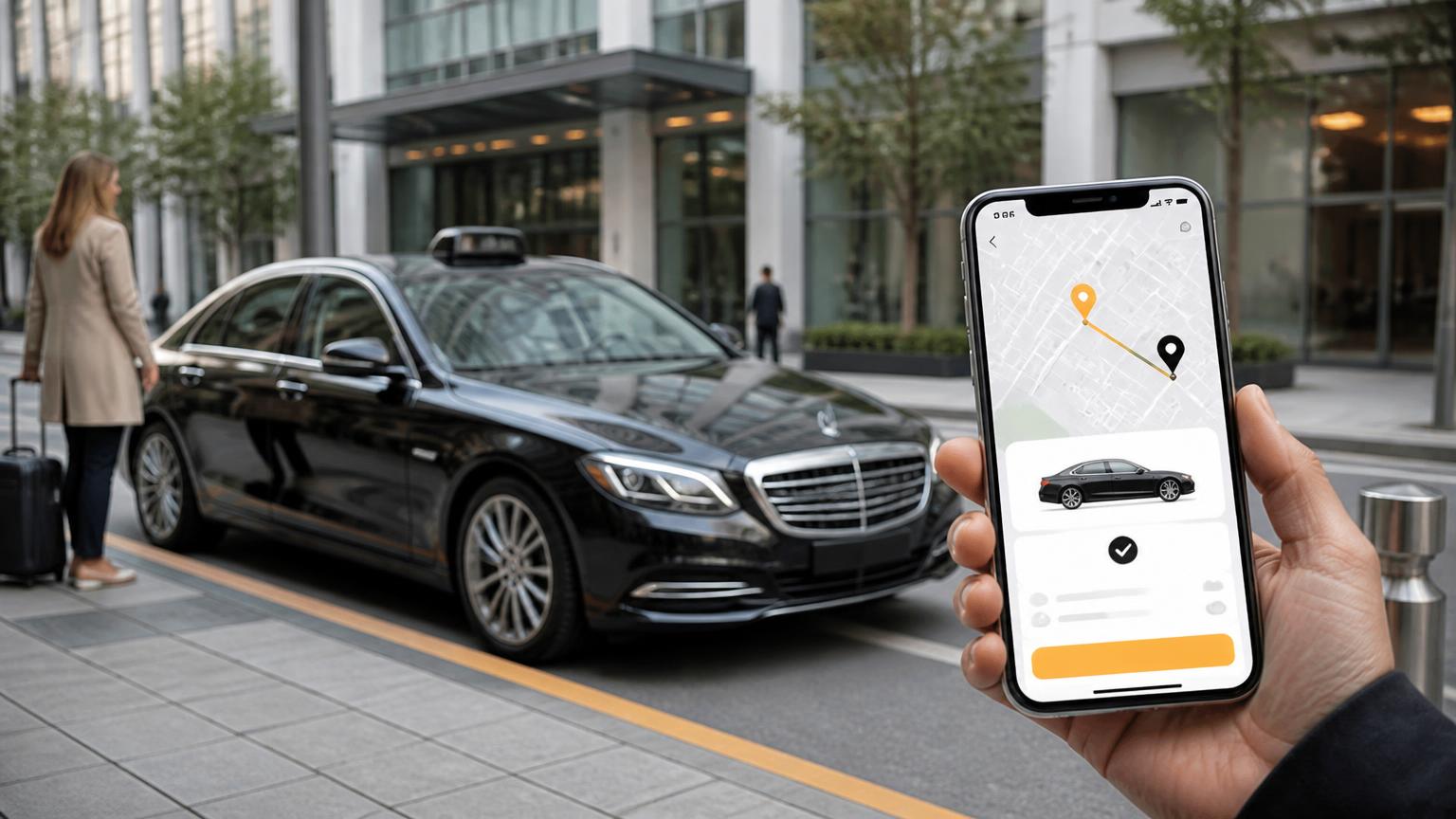
Every missed call after hours is a booking your competitor takes. Every quote request that sits in an inbox for twenty minutes is a passenger who has already opened another tab. Automated booking capture is how modern taxi operators close those gaps without adding staff.
This guide explains what automated booking capture means for a taxi fleet, which parts of the workflow can be automated, what features to demand from taxi booking software, and what the commercial impact looks like for a small operator.
What automated booking capture actually means
At its simplest, automated booking capture moves five manual steps into software:
- Enquiry. The passenger visits your site or opens your app.
- Quote. They enter pickup, drop-off, date, time and passengers; the system returns a fare instantly.
- Booking. They choose a vehicle class and confirm the job.
- Payment. Card is charged or authorised, or an on-account charge is logged.
- Dispatch. The job is assigned to the nearest available driver without a dispatcher touching it.
The passenger gets confirmation, a receipt and driver tracking. You get a confirmed, paid job in your system before anyone in your office has seen it.
Capture more bookings with less phone time
Book a 20-minute demo and we will set up your automated quote, booking and payment flow — then show you exactly how many extra jobs convert without a single phone call.
Why taxis specifically need this
Taxi work is high-volume and low-margin. A single missed Saturday night can cost more than a month's software subscription. The economics of automation are different from limo or chauffeur work because the volume justifies even small conversion gains.
Specifically, automated capture helps taxi operators with:
- After-hours demand. Airport runs, hospital discharges and late-night bar work often happen when your office is closed.
- Repeat local rides. Saved addresses and one-tap rebooking turn occasional callers into regulars.
- Price-sensitive passengers. An instant quote removes the hesitation that sends them to Uber.
- Driver efficiency. Auto-dispatch means less time on the radio and more time earning.
Must-have features in taxi booking software
Not every booking form is automated capture. A real system needs these capabilities:
| Feature | What it captures |
|---|---|
| Instant fare calculator | Passengers who would otherwise call for a quote |
| Vehicle class selector | Choice between saloon, estate, MPV, wheelchair-accessible |
| Card payment integration | Pre-paid bookings, no-shows and cancellation revenue |
| Auto-dispatch | Jobs routed to the closest available driver by GPS |
| Flight tracking | Airport jobs adjusted for delays automatically |
| Corporate account portal | B2B work without manual invoicing every trip |
| Passenger app | Repeat bookings in two taps with live driver tracking |
The commercial impact
Consider a 5-vehicle taxi fleet doing 150 jobs a week. If automated capture converts just 10 extra jobs a week from missed calls and after-hours enquiries, and the average fare is $25, that is $250 a week or $13,000 a year in incremental revenue. Against a software cost of $30 per month, the payback is immediate.
The less visible gain is dispatcher time. Every web booking is a phone call your team does not have to take, which means the same staff can handle growth without adding headcount.
Common mistakes when choosing taxi booking software
- Commission-based apps. They capture bookings but take 10–25% of every fare. That is not automation; it is a tax.
- Widget-only booking forms. A contact form that emails your office is not automated capture. The passenger still waits for a human response.
- No payment integration. You capture the booking but not the revenue, and no-shows still hurt.
- Vendor-owned apps. If the app is published under the vendor's account, you lose your customer base if you leave.
How to roll it out
- Audit your current leak points. Count missed calls, after-hours enquiries and quote requests that never convert.
- Configure fare rules. Zone pricing, mileage rates and surcharges must be accurate before the form goes live.
- Brand the booking site. Your domain, your colours, your phone number. Passengers should not feel they are on a third-party site.
- Connect payments. Use your own Stripe, Square or PayPal account so money flows directly to you.
- Train drivers on the app. Auto-dispatch only works if drivers accept jobs reliably.
- Promote the booking link. Add it to Google Business Profile, social media, email signatures and QR codes in vehicles.
The bottom line
Automated booking capture is not a luxury for taxi fleets; it is the difference between operating during office hours and operating whenever a passenger needs a ride. The right taxi booking software turns your website into a 24-hour booking channel, captures revenue you currently lose, and frees your dispatchers to handle the exceptions that actually need a human.
See how it works on your own fleet: book a demo, compare published pricing, or read our 2026 dispatch software ranking.