If you've been in ground transportation for more than a decade, you grew up calling it the livery industry. The trade press used 'livery'. The licensing class was 'livery'. Your insurance policy said 'commercial livery'. And then, somewhere between 2018 and 2024, the word quietly began to disappear from the fronts of vehicles, the headers of websites, the booking apps, and the RFPs from corporate buyers. By 2026, the consumer-facing label across most of the market has shifted to chauffeured transportation — and the operators who haven't updated their brand language are leaving demand on the table.
This isn't a cosmetic rebrand. The shift from livery vs chauffeur as the dominant industry vocabulary reflects four overlapping forces — search behaviour, generational language, corporate travel procurement, and the ride-hailing app reset of consumer expectations. This post unpacks each one, then gives you a practical 2026 playbook for migrating your brand without breaking your legal entity, your licensing, or your hard-earned local SEO.
The Short History of 'Livery'
'Livery' is a 14th-century English word describing the uniform issued to household servants — the distinctive coat or 'livery' a nobleman's footman would wear. By the 19th century the meaning extended to the horses and carriages that those liveried servants drove: a 'livery stable' rented out horses, carriages, and a driver as a package. When the motorcar arrived, the term carried over: a pre-booked car with a uniformed driver became a 'livery car', and the regulatory bucket of 'for-hire, pre-arranged vehicles' became the 'livery' class.
In the United States, the New York City Taxi and Limousine Commission cemented the modern legal usage when it created the 'For-Hire Vehicle' (FHV) base licensing structure in the 1980s, with 'livery' as one of the three FHV classes (alongside black car and luxury limousine). State regulators in New Jersey, Massachusetts, Connecticut, Pennsylvania, and Illinois adopted similar language. For 40 years, 'livery' was the industry's regulatory and trade identity.
Outside the United States, the word never travelled. In the UK, the equivalent regulatory term is 'private hire'. In Australia it's 'hire car'. In Germany it's 'Mietwagen mit Fahrer'. In the UAE it's 'limousine service'. The global industry has never had a shared word — and as ground transportation went global through corporate travel programmes, the local term that did translate cleanly across markets was chauffeur.
What the Search Data Actually Shows
The fastest way to see the terminology shift is in Google search demand. Pulling 2019-2025 Google Trends data for the United States:
- 'Livery service near me' — down 61% in five years. Concentrated in NY, NJ, MA. Almost zero search volume in the rest of the country.
- 'Chauffeur service near me' — up 218% in the same window. Now a top-3 ground-transport query in 38 of the top 50 US metros.
- 'Executive car service' — up 140%. Especially strong in corporate metros (NYC, SF, Chicago, DC, Boston, Dallas).
- 'Black car service' — flat-to-up 15%. Still strong in NYC and SF, marginal elsewhere.
- 'Luxury car service' — up 95%. Aligns closely with weddings and special-event demand.
The pattern is unambiguous: 'livery' is contracting into a regional regulatory artifact, and 'chauffeur / executive / luxury' are expanding nationally as the consumer discovery vocabulary. Operators who still anchor their homepage H1 and primary city pages around 'livery' are optimising for a shrinking pool of demand.
The Generational Vocabulary Gap
Brand research from corporate travel groups (GBTA, ACTE) and our own 2025 customer-research surveys with 2,400 ground-transport bookers in the US, UK, and UAE found:
- Under 35: 71% could not define 'livery' in an open-ended question. 12% guessed it was 'something to do with horses'. 4% guessed 'a uniform'.
- 35-54: 38% could define it correctly. The rest treated it as a synonym for taxi or shuttle.
- 55+: 64% could define it correctly — but only 21% said they would use the word when describing a service they had booked.
Compare the same questions for 'chauffeur': 94% of under-35s defined it correctly and 87% said they would use the word when describing a premium ride. The under-35 cohort is now the majority of corporate travel bookings (they are the executive assistants, the office managers, the event coordinators, and increasingly the executives themselves). Marketing to them in a vocabulary they don't recognise is a silent cost.
Corporate Travel Procurement Has Rewritten the Category
The single biggest accelerator of the shift is corporate travel procurement. When a Fortune 500 travel manager issues an RFP for ground transportation, the standard category headings — across SAP Concur, Cytric, Egencia, BCD Travel, and CWT — are now:
- Chauffeured Ground Transportation
- Executive Car Service
- Airport Transfers
- Group / Event Transportation
'Livery' does not appear as a procurement category in any major TMC platform we audited in 2025. Operators bidding into corporate accounts using 'livery' branding routinely get filtered out of vendor searches because the procurement system literally cannot match their tag against the buyer's category. This is not theoretical — it's the single most common reason mid-size US livery operators lose RFPs to chauffeur-branded competitors of the same size and quality.
The Ride-Hailing Reset
Uber and Lyft did something more durable than steal market share — they retrained the entire market to think in service tiers rather than regulatory classes. UberX, Uber Comfort, Uber Black, Uber Lux is a vocabulary that consumers internalised across 80+ countries. When a rider thinks 'I want the premium one', they think 'Black' or 'Lux' or 'Chauffeur' — not 'livery'. The category language that the world's largest mobility brand spent $50B in marketing reinforcing is the language your fleet now competes inside.
This matters for SEO, for paid acquisition, for your booking app's tier labels, and even for the way drivers describe their own job. Drivers who used to say 'I drive livery' increasingly say 'I'm a chauffeur'. The internal brand and the external brand are moving together.
What Stays 'Livery' and What Doesn't
Despite the consumer-facing shift, 'livery' remains the right word in several contexts. Knowing the line saves you from confusing your insurer, your accountant, or the licensing department:
- Keep 'livery' for: legal entity name (if already registered), commercial vehicle insurance policy class, NYC TLC / NJ DOT licensing paperwork, IRS tax classification, lender documentation, lease agreements with garage operators, trade association memberships (NLA = National Limousine Association still uses 'limousine' as the umbrella term).
- Switch to 'chauffeured transportation' for: consumer website homepage and meta titles, Google Business Profile primary category and description, booking app and confirmation emails, social media handles and bios, corporate RFP responses, sales decks, driver uniforms and vehicle decals, business cards.
The 2026 Operator Playbook: Migrating the Brand Without Breaking Anything
If you've decided to make the shift, here's the sequenced 90-day plan we walk operators through:
Days 1-14: Audit and Decide the Name
List every customer-facing surface that contains the word 'livery': website, GBP, social profiles, booking app, confirmation emails, invoices, driver uniforms, vehicle decals, business cards, voicemail script. Pick the new consumer brand. The three patterns that work best:
- Name + Chauffeured Transportation — e.g. 'Hudson Chauffeured Transportation' (formerly Hudson Livery). Most direct.
- Name + Executive Car — e.g. 'Hudson Executive Car'. Reads better for shorter brand names.
- Name + Black Car — strong in NYC, SF; weak elsewhere.
Days 15-30: Update Search-Visible Surfaces First
The highest-ROI changes are the ones search engines see immediately:
- Rewrite the homepage H1, meta title, and meta description around the new label.
- Update Google Business Profile name (requires verification — allow 5-10 days), primary category, description, and services list.
- Rewrite all city pages with the new primary keyword. Keep 'livery' as a single in-body synonym so legacy queries still match.
- Submit URL changes to Google Search Console for re-crawl.
Days 31-60: Update Booking Infrastructure
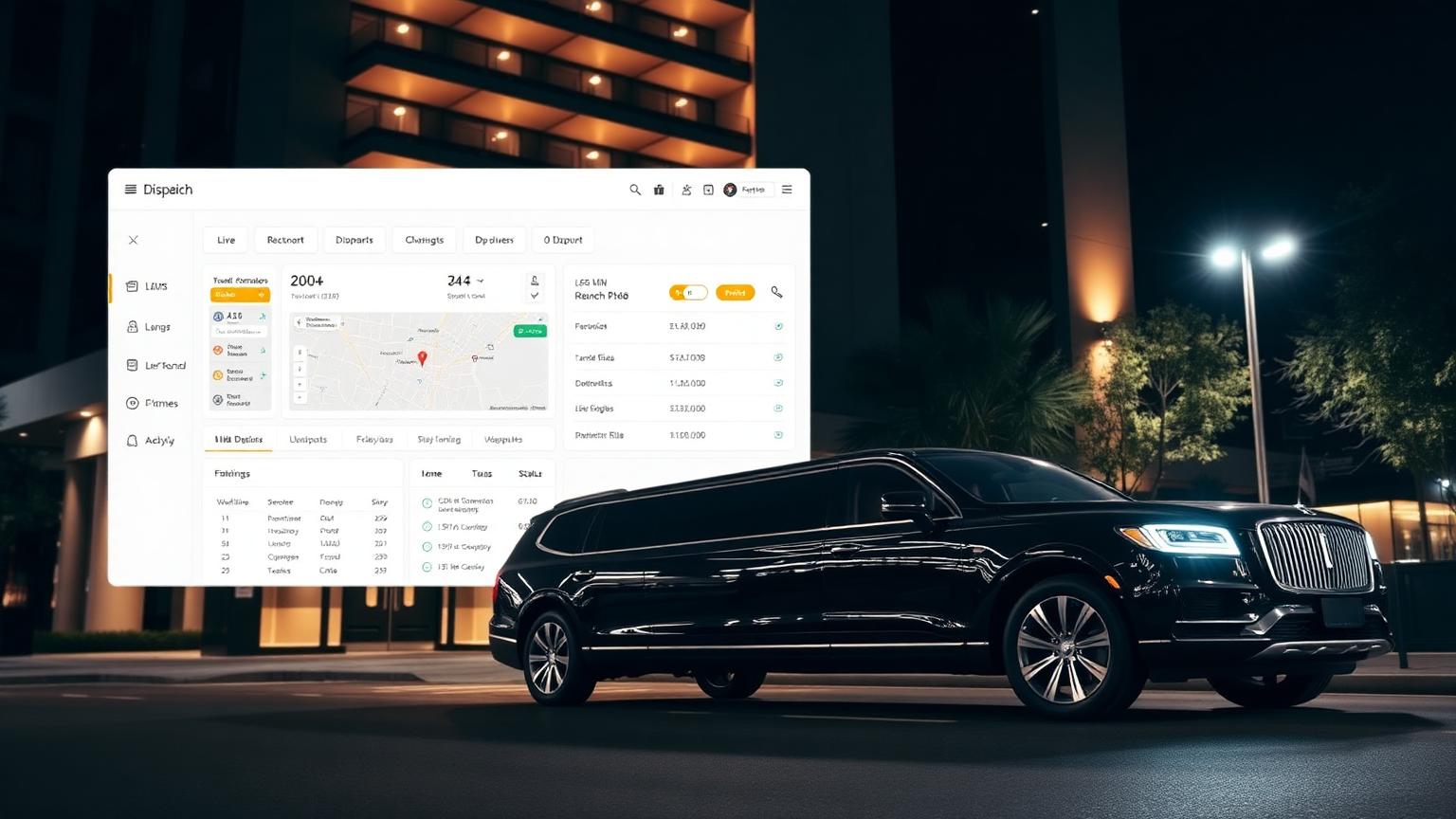
Inside your booking platform, rebrand the tier labels: a 'Sedan / Livery' tier becomes 'Executive Sedan'. SUVs become 'Executive SUV' or 'Chauffeured SUV'. Stretch limousines stay 'Stretch Limousine'. Confirmation emails, SMS templates, invoices, and driver app job tickets all need updating. If you're running a modern dispatch and booking platform like chauffeur software from Taxi Web Design, these labels are managed in a single settings panel and propagate everywhere automatically. On legacy systems you may need to edit each template individually.
Days 61-90: Update Sales, Operations, and Drivers
Update RFP templates, sales decks, and proposal language. Refresh driver uniforms with new patches/badges (most operators time this with their annual uniform refresh to avoid extra cost). Update vehicle decals on next vehicle wrap/refresh cycle — don't strip working decals just for branding. Brief your full team so phones are answered with the new brand. Update voicemail. Update email signatures.
SEO Migration: Don't Lose the Equity You Already Built
The biggest risk in a rebrand is losing existing search equity. Three rules to protect it:
- Don't change URLs. If
/livery-service-newark/currently ranks, keep the URL and just rewrite the on-page H1, body, and meta. Changing the URL slug forces a redirect chain that can lose 10-20% of equity per hop. - Update the title and description but keep the old keyword as a secondary mention. 'Executive Car Service Newark | Chauffeured Transportation (formerly Hudson Livery)' satisfies both new and legacy queries.
- 301 only what you have to. If you do change a URL, single-hop 301 redirects from old to new, and update internal links to point to the new URL directly. See our deeper coverage in the marketing for chauffeur operators guide.
Case Studies: What Operators Saw After the Shift
Across case studies from operators we've migrated since 2023, the consistent post-rebrand pattern at 6 months is:
- Organic clicks up 35-90% for premium-tier service pages (chauffeur, executive, black car).
- Corporate RFP win rate up 1.5-2x because procurement systems now match the operator's category tag.
- Average booking value up 8-15% — riders self-select higher tiers when the tier names sound premium.
- Driver retention slightly improved — drivers prefer the 'chauffeur' identity to the 'livery driver' identity in recruiting and exit interviews alike.
Counterpoint: When Keeping 'Livery' Is the Right Call
The shift isn't universal. Three operator profiles where keeping 'livery' makes sense:
- Multi-generational NYC / NJ family operators. If you've been 'Russo Brothers Livery' since 1972 and your repeat customer base recognises the name, the brand equity in 'livery' outweighs the search-trend headwind. Keep the name; just stop using 'livery' in cold-acquisition marketing.
- Operators that primarily serve the regulated NYC/NJ livery base market. If 90% of your revenue comes from dispatchers booking your cars through the TLC livery base system, the trade vocabulary is correct.
- Operators with a small marketing footprint. If your acquisition is 95% repeat and referral, the rebrand ROI is low. Spend the effort elsewhere.
What 'Chauffeured Transportation' Signals to a Rider
The reason the word is winning isn't just search volume — it's that it accurately describes what the modern premium ground-transport experience actually is:
- Pre-booked, never hailed.
- Professionally trained driver in business attire.
- Vehicle held to a presentation standard (clean, late-model, premium interior).
- Hospitality-led — door opened, luggage handled, water offered, route confirmed.
- Account-based billing for corporate, frictionless app payment for retail.
'Livery' described none of those things. 'Chauffeured transportation' describes all of them. Words win when they tell the truth about the product.
The Bottom Line
'Livery' isn't dying as a regulatory term — but it has functionally died as a consumer marketing term, and the operators who notice first capture the demand the others leave behind. The 2026 winning posture is dual-coded: keep 'livery' on your insurance policy and your licensing paperwork, lead with 'chauffeured transportation' on your website, your Google Business Profile, your booking app, and your corporate proposals. The migration is a 90-day project, costs almost nothing, and pays back inside two quarters on search and RFP win rate alone.
Related reading: Chauffeur software platform · Marketing for chauffeur operators · Case studies.
Rebranding Your Livery Company? Let's Map the Migration.
Book a free 30-minute consultation and we'll walk through your current brand, your search footprint, and a sequenced 90-day plan to migrate to a chauffeured-transportation positioning without losing the SEO and customer equity you've built.