Most marketing for chauffeur business operators is built on borrowed playbooks that don't fit the market. Black car and limousine companies copy rideshare tactics, taxi-app tactics or generic small-business advice — and then wonder why the spend doesn't convert. This is a working 2026 guide to why those tactics fail, and the channel mix, positioning, local SEO foundation and operational changes that actually move the revenue needle in this specific vertical.
The single biggest lesson from operators who grew 2–4x in the last 24 months: the buyer is not a casual rider — it is a corporate travel manager, an executive assistant, a hotel concierge or a high-net-worth repeat client. They buy on trust, reliability data and operational credibility, not on app installs or discount codes. Everything below flows from that reality.
Why Most Black Car Operator Marketing Fails in 2026
Walk into ten chauffeur operators with a stalled growth chart and you'll see the same five mistakes:
- Copying rideshare tactics: Paid social, app-install ads and discount codes work for Uber-style mass-market apps. They do not work for a premium service whose customer doesn't tap "book now" on TikTok.
- No local SEO foundation: Operators pour money into paid ads while their Google Business Profile has 12 reviews, no service area defined, and no recent posts. The ad clicks land on a website with no trust signals and convert at <1%.
- Weak positioning: "Premium chauffeur service" is not a position — every competitor says the same thing. Without a clear claim (e.g. "the only fully insured Mercedes S-Class fleet in Dallas with sub-12-minute response"), marketing has nothing to amplify.
- Ignoring corporate accounts: One signed corporate account with 30 rides a month is worth more than 500 casual app downloads. Most operators have no outbound corporate strategy at all.
- Measuring the wrong things: Reporting on impressions, clicks and "engagement" instead of booked rides, revenue per channel and customer lifetime value. What gets measured wrong, gets optimised wrong.
What LA's High-Engagement Operators Are Actually Doing
The fastest-growing black car operators in Los Angeles right now share a remarkably consistent playbook — and almost none of it looks like traditional advertising. They lead with operational proof: published response time data, fleet photos shot weekly, behind-the-scenes content of drivers being trained, and direct quotes from named corporate clients. Their Google Business Profiles average 400+ reviews. Their Instagram and LinkedIn feeds are 60% operations, 30% client wins, 10% promotion. They post weekly.
The angle that works: stop selling the ride, start selling the operation behind the ride. The buyer wants to know what happens when their flight is delayed at 11pm, who answers the phone, what the backup vehicle plan is, and whether the chauffeur has been with the company for more than 18 months. Marketing that surfaces those answers — concretely, with names and numbers — outperforms generic "luxury chauffeur" content by 5–10x on every measurable metric.
The 2026 Channel Mix That Actually Works
After tracking dozens of chauffeur operators across the US, UK and Australia, six channels carry almost all the revenue lift. They are listed in priority order — fund the top of this list before touching the bottom.
1. Local SEO and Google Business Profile
This is the single highest-ROI investment a chauffeur operator can make. Over 70% of "chauffeur near me" and "black car service [city]" searches happen on Google, and the operator who ranks in the local 3-pack captures the bulk of high-intent demand at zero cost-per-click. The work is unglamorous but compounds: a fully optimised Google Business Profile with weekly posts, 100+ authentic reviews with operator responses, city- and airport-specific landing pages, schema markup, and a steady drip of locally relevant content. Pair it with a focused on-page SEO programme — see our SEO services for taxi operators and the local SEO playbook for the full step-by-step.
2. Direct Corporate Account Outreach
Build a list of 200 local companies with travel programs — law firms, finance, consulting, media, healthcare. Identify the travel manager or executive assistant on LinkedIn. Send a one-page capability deck with insurance certificates, fleet inventory, technology stack, response time SLAs and three named client references. Offer a 30-day pilot with monthly invoicing and a dedicated account manager. Follow up monthly. Operators who run this disciplined outbound motion typically close 3–6 corporate accounts in the first 90 days, each worth $4,000–$25,000/year in recurring revenue.
3. Hotel and Concierge Partnerships
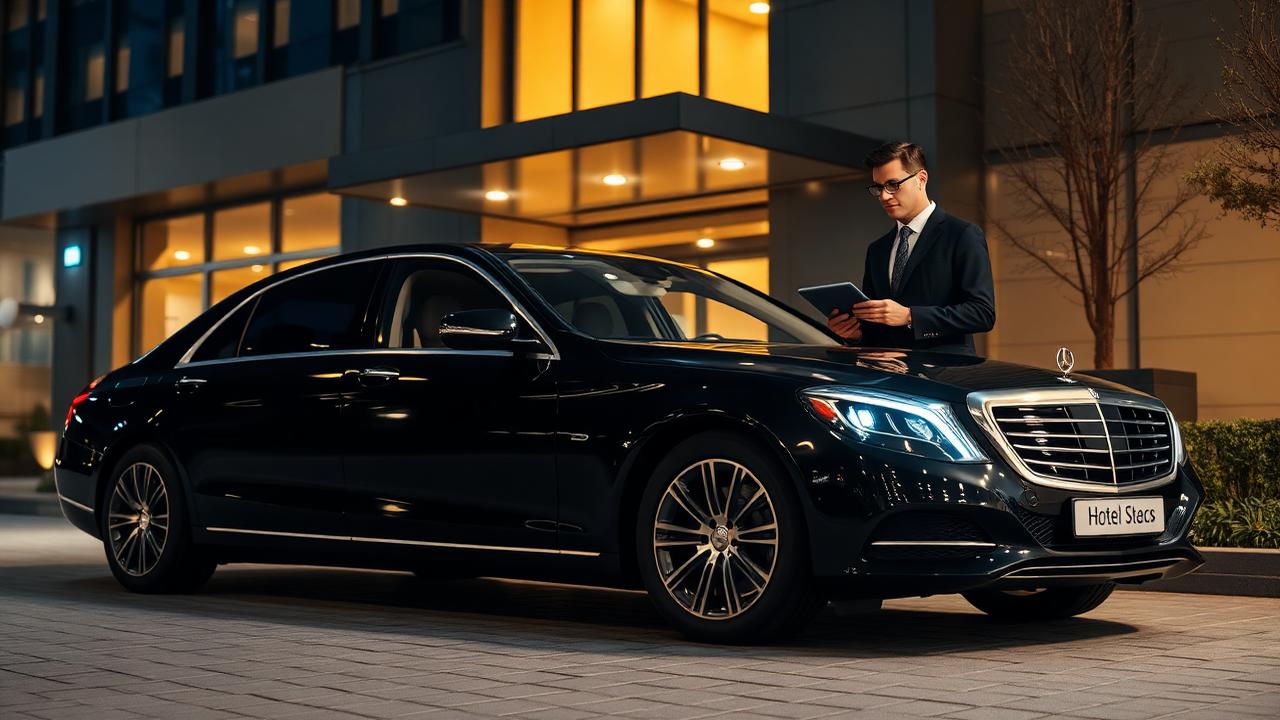
Every 4- and 5-star hotel in your service area has a concierge desk that recommends transportation. A structured partnership — tiered commission, dedicated dispatch line, branded collateral at the desk, monthly performance reports — turns concierges into a high-margin, low-cost acquisition channel. The top operators in any city have signed 8–15 hotel partnerships and credit them with 15–25% of total revenue.
4. Google Ads on High-Intent Transactional Keywords
Skip display, skip YouTube, skip discovery. Run a tightly scoped search campaign on transactional keywords: "[city] chauffeur service", "[city] airport black car", "limo service [neighbourhood]", "executive car service [city]". Use exact and phrase match, negate everything informational, and send traffic to dedicated landing pages — never the homepage. A well-built Google Ads programme in this vertical typically delivers a 4:1 to 8:1 return on ad spend within 60 days.
5. Reputation and Review Marketing
Every completed ride should trigger a review request — SMS first, email follow-up after 24 hours. Aim for a 25–35% response rate, which means 100 monthly rides produce 25–35 fresh reviews. Respond to every review (5-star and 1-star) with a real, personalised reply. Reviews are the single biggest conversion lever on both Google Business Profile and your website, and they compound the local SEO investment at zero marginal cost.
6. Referral and Repeat-Rider Programmes
Chauffeur clients are high-LTV and high-trust — exactly the profile that converts on referrals. A simple programme (e.g. $50 ride credit to both referrer and referred client on first booking) costs almost nothing and generates a steady 10–20% of new bookings for mature operators. Promote it inside the booking confirmation email, the receipt, and the in-vehicle welcome card.
Positioning: How to Stop Sounding Like Every Other Chauffeur Company
"Premium chauffeur service" is not a position. It is what every competitor says, which means it says nothing. A working position in 2026 contains three concrete elements: a defined buyer, a specific promise, and a proof point that competitors can't easily copy.
Examples of working positions from operators that doubled revenue in the last 18 months:
- "The only fully W-2-employed chauffeur fleet in Boston — every driver background-checked, drug-tested and trained to TSA executive protection standards."
- "London's highest-rated airport chauffeur service for delayed flights — average wait time after touchdown: 7 minutes, 24/7 live flight tracking on every booking."
- "Sydney's only chauffeur company publishing real-time on-time performance data to every corporate client every Monday."
Each of these is specific, provable, and hard to copy without operational change. That last point matters: the strongest positions force competitors to make a business decision to match you, not just a marketing one.
The Website Is the Marketing — Most Operator Sites Are Costing Them Money
The most expensive marketing mistake in this vertical is sending paid traffic to a homepage that looks like every other chauffeur site: a stock photo of a black car, a vague headline, a contact form. The traffic bounces, the ads burn, and the operator concludes "marketing doesn't work".
A 2026 chauffeur website that converts paid traffic at 5–12% (vs. industry average 1–2%) has all of the following:
- City-specific and airport-specific landing pages with unique copy, schema markup and local trust signals.
- Visible fleet inventory with real photographs (not stock), shot recently, with vehicle year and amenities.
- Embedded reviews from Google with star count, review count and dates.
- An instant fare estimator and online booking flow — not just a "request a quote" form.
- A corporate accounts page with insurance, SLA, billing and onboarding details.
- Page load under 2 seconds on mobile, Core Web Vitals in the green.
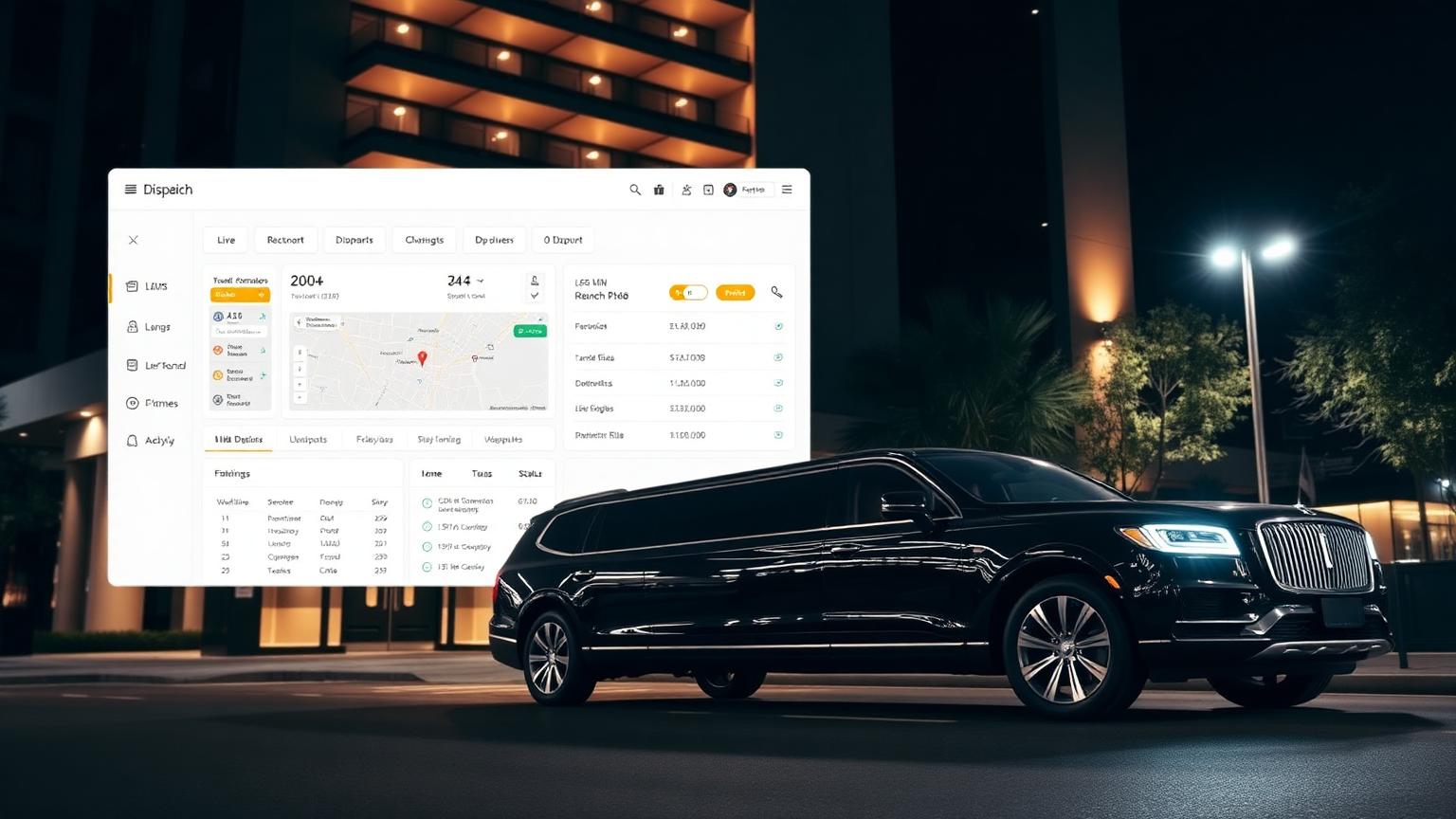
If your current site fails on three or more of these, the highest-leverage marketing decision you can make this quarter is a site rebuild before adding a dollar of paid spend. Explore our purpose-built limo booking software and online booking system to see what a conversion-tuned chauffeur stack looks like.
How Much Should a Black Car Operator Spend on Marketing?
Profitable chauffeur businesses in 2026 typically reinvest 6–10% of gross revenue into marketing, weighted heavily toward local SEO, Google Ads on transactional keywords, and corporate account acquisition. The rough budget bands by operator size:
- Under 10 vehicles ($300k–$1M revenue): $1,500–$3,000/month. Fund a strong Google Business Profile, basic local SEO, modest Google Ads, and one part-time outbound corporate effort.
- 10–25 vehicles ($1M–$3M revenue): $4,000–$10,000/month. Add a dedicated SEO programme, scaled Google Ads, structured hotel partnerships, and a full-time growth or sales hire.
- 25+ vehicles ($3M+ revenue): $8,000–$25,000/month. Add reputation marketing software, a CRM, dedicated corporate account managers, and a paid social presence (LinkedIn, not Instagram) targeting travel and procurement professionals.
The mistake to avoid: lump-sum spending on one channel. The mix matters more than the absolute number. An operator spending $3,000/month across three working channels almost always beats one spending $8,000/month on a single agency-run paid social campaign.
The Operations That Make Marketing Work
The hardest truth in this guide: most "marketing doesn't work" stories are actually operations problems. Marketing brings the lead — operations either converts it into a repeat client or burns it forever. The operations levers that decide whether your marketing compounds:
- Phone answer time: Under 20 seconds, 24/7. A missed call from a paid ad click is a $20–$40 loss.
- Quote turnaround: Inbound quote requests answered within 5 minutes during business hours. After 30 minutes, conversion drops by more than 80%.
- On-time performance: Sub-5-minute window on 95%+ of pickups. One late pickup loses a corporate client; one early pickup wins a referral.
- Chauffeur retention: Drivers who stay 24+ months get 4x the repeat-request rate of drivers in their first 6 months. Marketing into a high-churn driver base is throwing money at a leaking bucket.
- Billing accuracy: Corporate accounts churn over invoicing errors faster than over service issues. Get the invoicing software right — see our corporate transport software.
What to Stop Doing
Honest list of activities that almost never produce ROI for a chauffeur operator in 2026 — stop them and reallocate the budget:
- Boosted Facebook and Instagram posts with no targeting strategy. Burns cash, produces vanity metrics.
- Cold email blasts to bought lists. Tanks domain reputation, almost zero response.
- Discount codes on Groupon-style platforms. Trains the market to wait for discounts, attracts non-repeat customers.
- Trade-show sponsorships without a structured follow-up plan.
- SEO content farms producing 500-word generic posts. Google's helpful content updates devalue them to zero.
- Generic "luxury chauffeur" branding videos with no offer, no call to action and no distribution plan.
A 90-Day Marketing Reset Plan for Black Car Operators
If your current marketing isn't working, run this 90-day reset before adding any new spend:
- Days 1–14: Audit the Google Business Profile. Add every missing field, upload 30+ fresh photos, set up weekly posts, request 25 reviews from recent clients.
- Days 15–30: Rebuild three landing pages — homepage, top airport route, corporate accounts. Add real fleet photos, real reviews, schema markup and a fast booking flow.
- Days 31–45: Launch a tightly scoped Google Ads campaign on 10 transactional keywords with a $50/day budget. Send all clicks to the new landing pages.
- Days 46–60: Build the corporate target list (200 companies) and launch the outbound LinkedIn sequence. Goal: 3 booked discovery calls.
- Days 61–75: Pitch the top 5 hotel concierge desks in your city. Bring printed collateral, offer a tiered commission, and ask for a 60-day trial.
- Days 76–90: Review every metric — booked rides per channel, cost per booked ride, corporate accounts in pipeline, hotel partnerships signed. Cut what isn't working, double what is.
Operators who complete this reset honestly typically see a 25–60% lift in booked rides by month 4 — without increasing total marketing spend. The full operational and growth playbook for scaling beyond this is captured in our operator guides library.
The Bottom Line
Marketing for chauffeur businesses doesn't fail because the market is too small or the competition is too fierce. It fails because most operators apply the wrong playbook — rideshare tactics for a corporate-and-repeat-client business, generic positioning for a market that buys on trust, and vanity metrics for a category where booked rides are the only thing that pays the bills. Get the foundation right (local SEO, corporate accounts, hotel partnerships, a website that actually converts), measure the right things (booked rides per channel, customer lifetime value, response time), and the channel ROI will look completely different inside two quarters.
Related reading: SEO services for taxi operators · Local SEO for taxi operators · Operator guides.
Want a Custom Marketing Audit for Your Chauffeur Business?
Book a 30-minute consultation and we'll review your current marketing — Google Business Profile, website, ads, corporate pipeline — and hand you a prioritised action list specific to your fleet, city and growth goals.