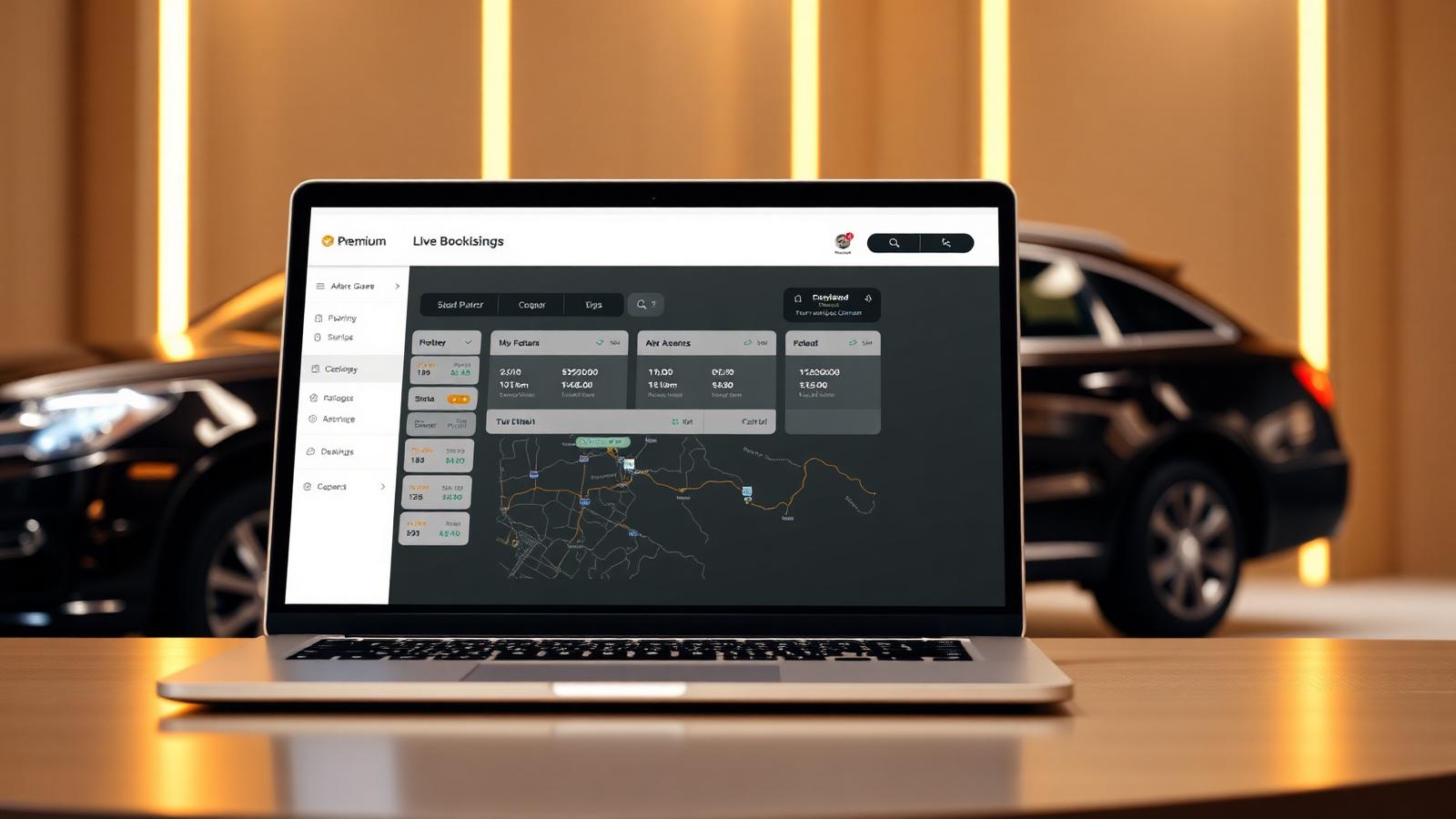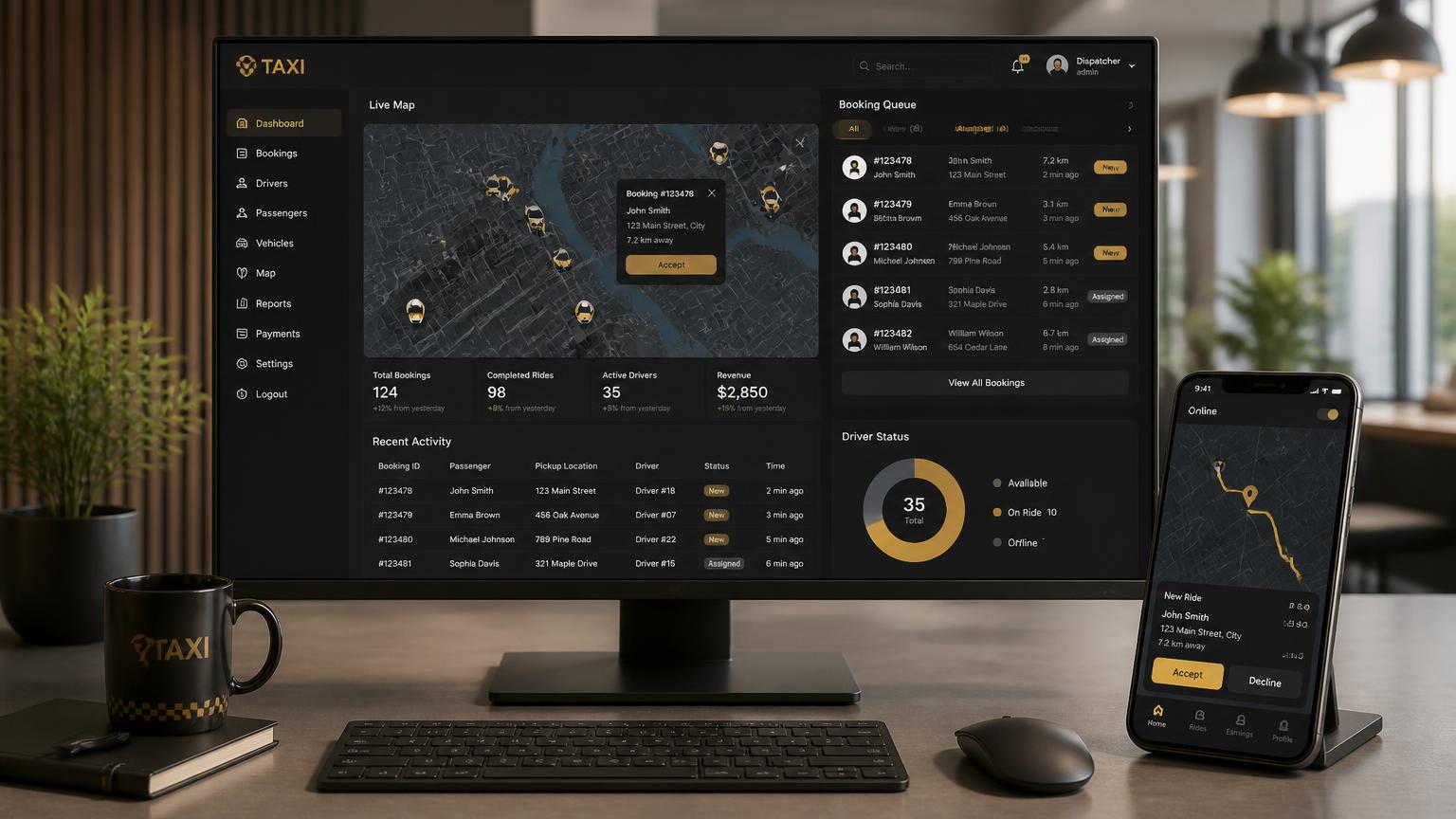
If you run a small limo, taxi or chauffeur operation, the software comparison you actually need is not a 60-row feature grid. It is a single question: is this tool built for a business my size, and can I predict what it will cost me next year? This comparison answers that for Taxi Web Design and Limo Anywhere in 2026, without pretending either product is bad.
The short version
Limo Anywhere is an enterprise reservation and dispatch suite. It is genuinely strong at what it does, and the operations that get full value from it tend to be large — commonly 200 or more vehicles, with in-house reservationists, an affiliate farm-in and farm-out desk, and someone whose job includes owning the software configuration. At that scale a setup fee, a multi-week onboarding and paid modules for extra capability are reasonable, because the fixed cost is spread across hundreds of cars.
Taxi Web Design is built for the other end of the market: owner-operators and fleets of 1 to 25 vehicles. Pricing is fixed and published, the branded passenger and driver apps and the booking website are included rather than sold as modules, there is no per-trip commission and no per-driver seat, and go-live is measured in days.
See the fixed-price platform on your own fleet
Book a 20-minute live demo and we will load your vehicle classes, hourly rates and airport zones on the call — then quote your exact scope in writing, with every line item shown.
Fleet size is the real dividing line
Software fit follows headcount more than features. A 250-vehicle operation needs role separation, granular permissions, affiliate settlement, complex approval chains and reporting that survives an audit. A three-car chauffeur company needs a booking page that converts, a driver who gets the job on their phone, a card that charges cleanly and an invoice a corporate client will pay.
When a small operator buys enterprise software, three predictable things happen. Onboarding takes weeks that the owner does not have. Ninety percent of the configuration surface is never touched. And the monthly bill stays flat regardless of whether last month had 90 jobs or 900.
Pricing: fixed and published vs quoted and modular
Taxi Web Design publishes its numbers because small operators shop on exact figures:
- Starter — $399 one-time setup + $10/month. 1 to 3 vehicles. Branded booking website, dispatch console, one branded mobile app, payment integration, free data import.
- Premium — $699 one-time setup + $30/month. 3 to 10 vehicles. Both passenger and driver apps, corporate accounts, invoicing, integrations.
- Global — $1,299 one-time setup + $40/month. Multi-currency pricing, automated local language, international airport work.
- Enterprise — from $8,500 one-time. Source-code ownership, unlimited fleet, white-label, SLA.
Limo Anywhere quotes commercially rather than publishing a single rate card. Operators comparing quotes in 2026 typically report a monthly platform fee in the $129 to $299 range at the small end, a setup or onboarding fee, and separate line items for capabilities a small operator often assumes are standard — branded apps, additional user seats, SMS credits and some integrations. None of that is dishonest; it is simply how modular enterprise pricing works. It is just very hard to forecast when you are running four cars.
Three-year cost, five vehicles
| Line item | Taxi Web Design (Premium) | Typical enterprise suite quote |
|---|---|---|
| Setup / onboarding | $699 one-time | $500 – $2,500 |
| Platform fee (36 months) | $1,080 | $4,644 – $10,764 |
| Branded passenger app | Included | Add-on, commonly ~$99/mo |
| Branded driver app | Included | Add-on, commonly ~$49/mo |
| Booking website | Included | Separate build or ~$59/mo |
| Per-trip / per-reservation fee | $0 | Common at $1.50 – $5 per trip |
| Indicative 3-year total | ~$1,779 | $10,000 – $25,000+ |
These are indicative ranges built from published rate cards and operator-reported quotes, not a promise about the quote you will personally receive. Always ask any vendor — including us — for the total 36-month figure in writing, with every line item named.
What "no hidden charges" actually means here
The phrase is overused, so here is the specific commitment. With Taxi Web Design there is no per-trip commission, no per-driver or per-dispatcher seat charge, no fee to publish your apps under your own developer accounts, no module unlock fee for corporate accounts on the tiers that include them, and no automatic annual price escalator. The costs that do exist and are not ours — Stripe or PayPal processing, SMS or WhatsApp message credits, the $99/year Apple developer account and the one-time $25 Google Play fee, and your own domain — are listed on your quote before you pay anything.
Where Limo Anywhere is the better choice
Be honest with yourself about scale. Pick the enterprise suite if you run 200-plus vehicles or a large multi-branch operation; if a material share of your revenue comes from affiliate farm-in and farm-out inside a vendor network; if you have dedicated reservationists on shift and need fine-grained permissions and audit trails; or if your corporate contracts require deep reservation workflows and settlement reporting that only a mature enterprise product handles. In those cases the setup fee and configuration time are an investment, not a tax.
Where Taxi Web Design wins
Pick fixed pricing if you run 1 to 25 vehicles; if you want your booking site and branded apps live in days rather than after a six-week implementation; if you want the customer relationship, the data and the app store listings in your own name; and if you need to know today what the platform will cost in month 30. Owner-operators, wedding and prom limo companies, airport transfer specialists, black-car startups and small chauffeur fleets are exactly the profile the product was designed around.
Migration: what a switch actually looks like
- Days 1–2 — export. Pull customers, saved addresses, vehicles, drivers, rate rules and open reservations to CSV. Every serious vendor allows this; ask before you sign anywhere.
- Days 3–5 — build. We import the data, configure vehicle classes, hourly and point-to-point rates, airport zones, gratuity and surcharge rules, and brand the booking site.
- Days 6–9 — apps. Passenger and driver apps are submitted under your Apple and Google developer accounts.
- Days 10–12 — parallel run. One shift or one vehicle class runs on the new platform alongside the old one while drivers get comfortable.
- Days 13–14 — cutover. Booking links, QR codes and the phone workflow point to the new system. The old subscription is cancelled after the final invoice cycle closes.
Questions to ask before you sign anything
- What is the total 36-month cost for my exact fleet size, with every line item named?
- Is there a per-trip, per-reservation or per-SMS charge, and at what rate?
- Are the passenger and driver apps published under my developer accounts, and do I keep them if I leave?
- Can I export my full customer database on demand, in a usable format?
- What is the contract term, the notice period and the annual price escalation clause?
- How many days from signature to taking a live booking?
A vendor that answers all six in writing is a safe vendor, whichever one you choose.
See the fixed-price platform on your own fleet
Book a 20-minute live demo and we will load your vehicle classes, hourly rates and airport zones on the call — then quote your exact scope in writing, with every line item shown.
The bottom line
Limo Anywhere is enterprise software for large chauffeur operations, and it earns its place there. Taxi Web Design is fixed-price software for small limo, taxi and chauffeur operators who need a booking website, dispatch and branded apps without a subscription that scales faster than the fleet does. If you run fewer than 25 vehicles and you cannot state today what your software will cost you in two years, that is the signal to switch.
Compare the two side by side on our Limo Anywhere alternative page, check the published numbers on pricing, or read the 2026 dispatch software ranking.