If you're still taking taxi bookings on a landline and writing fares on a clipboard, you're leaving serious money on the table. Modern taxi booking software automates the parts of your operation that used to need two dispatchers — and unlocks revenue streams (corporate accounts, app bookings, online quotes, hotel concierge channels) that a phone-only fleet simply can't reach. In 2026, it's no longer a "nice to have" — it's the operational backbone of every fleet that's actually growing.
This guide walks through exactly what taxi booking software has to offer in 2026, who each feature pays back for, and the real numbers behind the decision — so by the end you'll know whether you need it, what to look for, and what you should expect to pay.
Our white-label software taxi dispatch + booking platform launches in 2–4 weeks. £399 setup, £10/month hosting, zero commission, full source-code ownership.
Book a 25-min demo → See pricingWhat Taxi Booking Software Actually Is
At its simplest, taxi booking software is the system that connects three sides of your business: passengers booking a ride, drivers accepting and completing jobs, and the office managing fares, accounts and reporting. The best modern platforms wrap all three sides in one product — a passenger app, a driver app, and an admin/dispatch dashboard — and stitch them together with auto-dispatch logic, cashless payments and real-time GPS.
Ten years ago, you needed three separate products to do this badly. In 2026 you can run the entire operation from one platform that costs less per month than a single dispatcher's salary.
1. Online & In-App Booking
A branded booking widget on your website plus a white-label passenger app (iOS + Android) lets customers book in 30 seconds — with instant fare quotes, vehicle selection, return trips, saved addresses and stored payment methods. Most fleets we work with see 70–90% of bookings shift from phone to app inside six months. That's not just convenience — it's a structural reduction in dispatcher workload and missed-call lost revenue, typically worth £18,000–£36,000 per year for a 10-car fleet.
2. AI Auto-Dispatch
The booking software automatically assigns each job to the optimum available driver based on GPS distance, driver rating, vehicle type, current workload, fairness algorithms and even fuel efficiency. No more dispatcher bottlenecks at 8am school runs or 11pm kicking-out time. Modern auto-dispatch engines complete the entire booking-to-driver handoff in under three seconds, which is faster than any human can read a screen.
Good auto-dispatch isn't just "send to the nearest car" — it factors in things like which driver is already heading toward the pickup zone, whether the vehicle has the right class (saloon vs MPV vs WAV), and whether the rider has a saved driver preference.
3. Driver App with Turn-by-Turn Navigation
Drivers accept jobs, navigate via Google or Apple Maps, capture signatures, take cashless payments and end shifts — all from one app. Built-in earnings tracking and end-of-day shift summaries keep drivers happy and reduce churn. The serious platforms also include in-app messaging with the dispatcher, SOS panic buttons and dash-cam integrations on request.
Driver retention is the silent killer in fleet economics — losing a driver costs around £2,500 in recruitment, training and lost rides. A driver app that respects the driver's time pays back faster than almost any other feature.
4. Cashless & Card Payments
Stripe, Apple Pay, Google Pay and corporate card on file — settled directly to your business account. Most platforms add zero markup on top of Stripe's standard rates (1.4% + 20p UK, 2.9% + 30¢ US). Cashless adoption above 60% materially reduces driver risk, cash-handling losses and end-of-night reconciliation work.
5. Corporate Accounts & Monthly Invoicing
Win local businesses, hotels, NHS trusts and councils with monthly billing, cost-centre tagging and PDF invoices auto-emailed at month-end. Corporate accounts typically have 3–5× higher lifetime value than retail riders — they don't switch on price, they pay in 30 days, and they refer other corporates. This is the single highest-margin segment any independent fleet can attack, and it's almost impossible to win without booking software that supports it.
6. Live Dispatch Board & Reporting
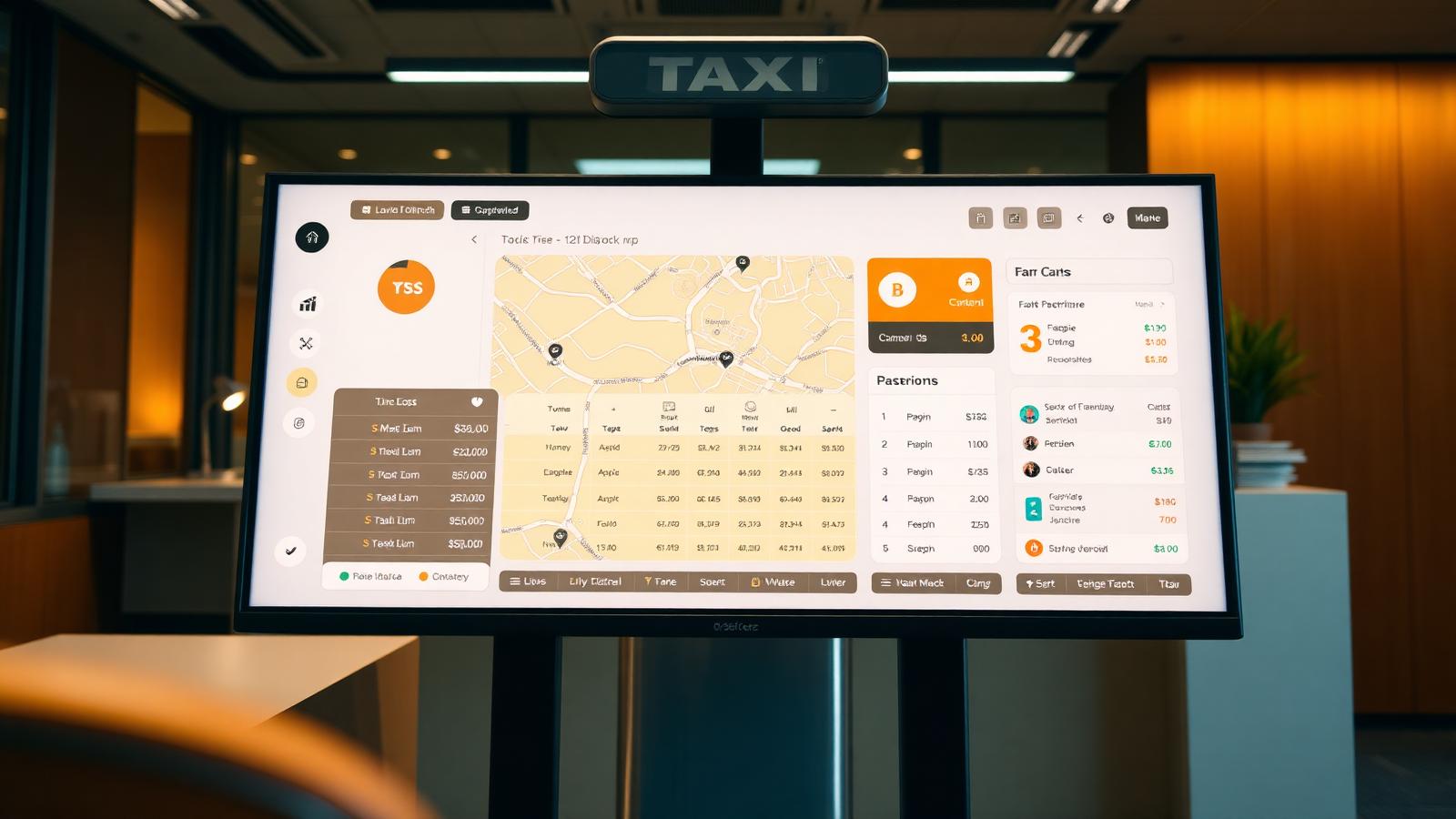
A real-time map of every job, driver and vehicle, plus daily, weekly and monthly reports on revenue, driver performance, cancellations, no-shows and aggregator share. The reports tab is where fleet owners actually run the business — knowing which drivers earn the most per hour, which zones lose money on dead miles, and where bookings are leaking to Uber.
7. SMS, Email & Push Notifications
Automatic booking confirmations, driver-arriving alerts, no-show notices, rating requests and rebooking nudges — all without dispatcher intervention. Push notifications are essentially free; SMS costs £0.04–£0.08 per message but typically pays back 4–6× in reduced no-shows and faster pickup completion.
8. Multi-Zone Fares, Surcharges & Airport Rules
Build your own pricing rules: zone-to-zone flat fares, airport waiting time and parking pass-through, school-run discounts, dynamic surge during peak hours, contract rates for corporates, and out-of-hours surcharges. Bad pricing engines are the reason most legacy SaaS feels brittle — the modern systems let you change fares in the admin panel without a support ticket.
9. Aggregator & Hotel Integrations
The serious platforms include APIs and pre-built integrations with Karhoo, Curb, Splyt and hotel concierge systems. That means jobs from corporate travel managers and hotel front desks land directly in your dispatch queue instead of going to Uber for Business. For city-centre fleets, this single channel can be worth 15–25% of revenue.
10. White-Label Branding & App Store Presence
Your name, your colours, your logo, your icon on the App Store and Google Play. White-label is the reason a £399 one-time platform out-performs a £400/month SaaS over 24 months — your customers download your app, not someone else's, and your brand compounds in their phone instead of an aggregator's.
What It Costs in 2026
Monthly SaaS runs anywhere from £20 per active driver (TaxiCaller starter) to £1,200/month (iCabbi enterprise). Most small-fleet UK operators land between £150 and £450/month all-in. A one-time white-label platform from Taxi Web Design starts at £399 setup + £10/month hosting with zero per-trip commission and full source-code ownership.
Run the 3-year math: a 10-car fleet on mid-tier SaaS pays roughly £12,000–£20,000 over 36 months. The same fleet on a one-time custom platform pays around £759 — and keeps the source code, the customer database and the brand at the end. See the full 2026 buyers' guide for the comparison.
How to Pick the Right Taxi Booking Software
Before you sign a demo NDA, write down the answers to these five questions:
- Do I own the customer list when the contract ends? If no, walk away.
- Are there per-booking commissions on top of the monthly fee? Most SaaS adds 1–3% — it compounds fast.
- Is the passenger app fully white-label, in my brand, on the App Store under my developer account?
- Does the platform support the corporate accounts, hotel and aggregator channels I want to win in the next 12 months?
- What's the realistic 3-year total cost, with the per-driver, per-SMS and per-booking add-ons included?
The Bottom Line
Taxi booking software is no longer a "nice to have" — it's the operational backbone of every fleet adding cars in 2026. The right platform pays for itself inside the first month by recovering bookings that used to leak to aggregators, eliminating dispatcher overtime, unlocking corporate revenue and removing the cash-handling risk drivers used to carry. The wrong one quietly bleeds 15–25% of fare revenue every month in commissions and seat fees.
If you'd like to see what a properly built, white-label, owned-forever booking platform looks like, book a 25-minute demo with our team — we'll walk through your specific fleet size and pricing on the call.