WhatsApp is now the #1 messaging channel on Earth — 2.9 billion users, 98% open rates and full support for location, payments and rich media. For taxi, limo and chauffeur operators, that means one thing: your next booking is one chat away, no app download required.
This pillar guide explains exactly how WhatsApp booking integration works for ground transport in 2026 — the technology, the costs, the conversation design, the dispatch hand-off and the regulatory pieces — and links out to focused cluster posts for each step.
Why WhatsApp Booking Is Eating App Bookings
App stores are saturated. The average rider deletes 3 apps a month and refuses to install another one for a single ride. WhatsApp solves that:
- Zero install friction — every rider already has it.
- 98% open rate vs. 20% for email and 12% for app push.
- Native location, payments and media built in.
- Two-way driver ↔ passenger chat without exposing phone numbers.
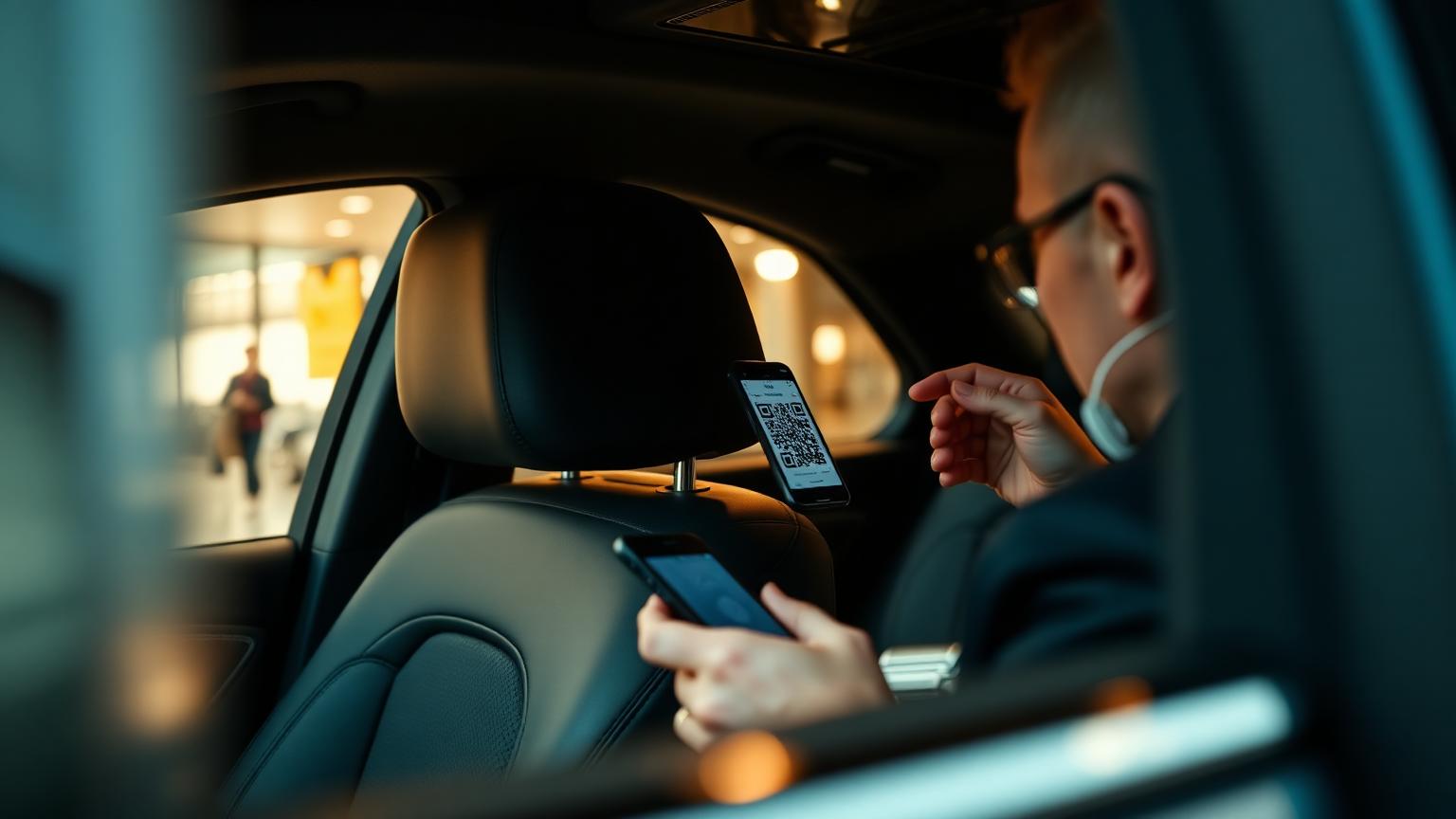
Combine WhatsApp with a QR code on the hotel concierge desk or airport pickup sign and you remove every step between "I need a car" and "ride confirmed". See our companion guide: QR Code Taxi Booking in 2026.
WhatsApp Business App vs. WhatsApp Business API
There are two products and operators constantly confuse them:
- WhatsApp Business app (free) — a phone app with quick replies, labels and a single inbox. Fine for under 30 bookings/day, single dispatcher, manual workflow.
- WhatsApp Business API (paid) — a server-to-server API that powers chatbots, AI replies, multi-agent inbox, dispatch integration and at-scale messaging. This is what every serious operator uses in 2026.
You access the API through a Business Solution Provider (Twilio, 360dialog, Meta Cloud API, Wati, Gupshup) or directly through a dispatch platform like Taxi Web Design that bundles it.
The Anatomy of a High-Converting WhatsApp Booking Flow
A booking flow that actually converts looks like this:
- Trigger — passenger sends "Hi" or scans a QR / clicks a wa.me link.
- Greeting + intent — bot replies with 3 buttons: Book now / Schedule / Speak to a human.
- Pickup capture — request location share or address.
- Drop-off + vehicle class — list message (Sedan / SUV / Limo / Van).
- Instant fare quote — pulled from your fare engine.
- Payment link or cash confirmation — Stripe / Paddle / cash on board.
- Dispatch hand-off — booking lands in your live console, driver assigned, ETA pushed back to WhatsApp.
- Live tracking link + driver chat — same thread, no app switch.
Done well, this flow takes 35–60 seconds end-to-end. Done badly (open-ended text, no buttons, slow bot) it loses 70% of riders.
Cost Breakdown: What WhatsApp Booking Actually Costs in 2026
Meta charges per conversation window (24 hours), not per message. Pricing varies by country and conversation category (utility, marketing, service, authentication):
- Service conversations (rider-initiated): free for the first 1,000/month, then ~$0.005–$0.04 each.
- Utility conversations (booking confirmations, driver assigned): ~$0.005–$0.025.
- Marketing conversations (promos): ~$0.025–$0.10.
Typical real-world bills:
- 2-car chauffeur: ~$30–50/month.
- 20-car taxi fleet: ~$100–180/month.
- 100-car airport/limo: ~$300–600/month.
Add the dispatch / chatbot platform on top. With Taxi Web Design, WhatsApp is bundled — no per-booking commission.
AI-Powered Replies: Beyond Simple Bots
In 2026, hard-coded "press 1 for booking" trees are dead. Modern operators run a hybrid:
- LLM (GPT-4.1, Gemini 2.5) for natural language intent + small talk.
- Structured flows for the actual booking transaction (so the fare and pickup are deterministic).
- Human hand-off when confidence drops or rider asks for "manager / complaint / refund".
This is the same AI stack we cover in How AI Is Changing Taxi Dispatch in 2026 — just applied to the front-of-house instead of the dispatch board.
Dispatch Hand-Off: The Make-or-Break Step
A pretty WhatsApp flow is worthless if the booking dies in the dispatcher's inbox. Your integration needs:
- A webhook from the WhatsApp bot to the dispatch API.
- A canonical booking schema (pickup lat/lng, drop-off, vehicle class, fare, passenger).
- Auto-dispatch rules (nearest driver, vehicle class match, priority).
- Status callbacks back to WhatsApp ("Driver Mike is 4 min away in a black Mercedes E-Class").
Compliance: GDPR, Opt-In and the 24-Hour Window
WhatsApp enforces three rules that operators break constantly:
- Explicit opt-in — you can only message a passenger first if they ticked a clearly worded box.
- 24-hour service window — outside that window you must use a pre-approved template message.
- No spam — Meta will ban your number on repeated complaints.
For GDPR / UK GDPR / CCPA, treat the WhatsApp number as personal data: store it encrypted, honor deletion requests, and document your legal basis (usually "performance of a contract" for ride bookings).
Cluster: Deep-Dive Guides on Every Step
This pillar links to focused cluster guides — read them in order to implement WhatsApp booking from zero:
- QR Code Taxi Booking in 2026 — the front door for WhatsApp.
- AI Taxi Dispatch — Beginner's Guide — the brain behind auto-replies and routing.
- Online Booking System — the canonical booking object WhatsApp writes into.
- Passenger App — when you do need a native app alongside WhatsApp.
- Dispatch System — the back-office that receives WhatsApp bookings.
- Chauffeur Dispatch Software — flow tuning for luxury fleets.
90-Day Implementation Plan
- Day 0–14: approve WhatsApp Business API via Meta + verify business.
- Day 15–30: design flow (3 happy paths + 2 edge cases), draft template messages, get template approval.
- Day 31–60: connect to dispatch API, run staff in shadow mode, measure abandon points.
- Day 61–90: launch to passengers via QR codes, hotel partners and Google Business Profile chat button. Add AI fallback.
Common Mistakes Operators Make
- Using a personal WhatsApp number — gets banned within weeks.
- Free-text bots with no buttons — kills conversion.
- No payment link — drivers stuck chasing cash.
- Sending marketing blasts without opt-in — permanent number ban.
- No dispatch hand-off — bookings die in the chat inbox.
When WhatsApp Is NOT the Right Channel
WhatsApp is dominant in EU, LATAM, India, Middle East, Africa and most of APAC. In the US and Canada, SMS + iMessage still rule for ride bookings, so pair WhatsApp with SMS booking via Twilio. For high-frequency commuter riders (5+ rides/week) a branded white-label app still wins on retention.
Ready to take bookings inside WhatsApp?
Book a 20-minute demo and we will show you a live WhatsApp booking flow tied to a real dispatch console — including AI replies, payment link, driver assignment and live tracking.