Affiliate disclosure: Taxi Web Design is an affiliate partner of BabyLoveGrowth.ai. If you sign up through the links on this page we may earn a commission at no extra cost to you. We only recommend tools we run on our own websites.
A growing share of buying research now ends inside an assistant. Someone asks ChatGPT which dispatch software suits a six-car fleet, or asks Perplexity what a booking website should cost, and acts on the answer without ever seeing ten blue links. If your business is not in that answer, you are invisible to that buyer.
The good news is that this is not a black box. Assistants retrieve, then summarise. Understanding those two steps tells you exactly what to build.
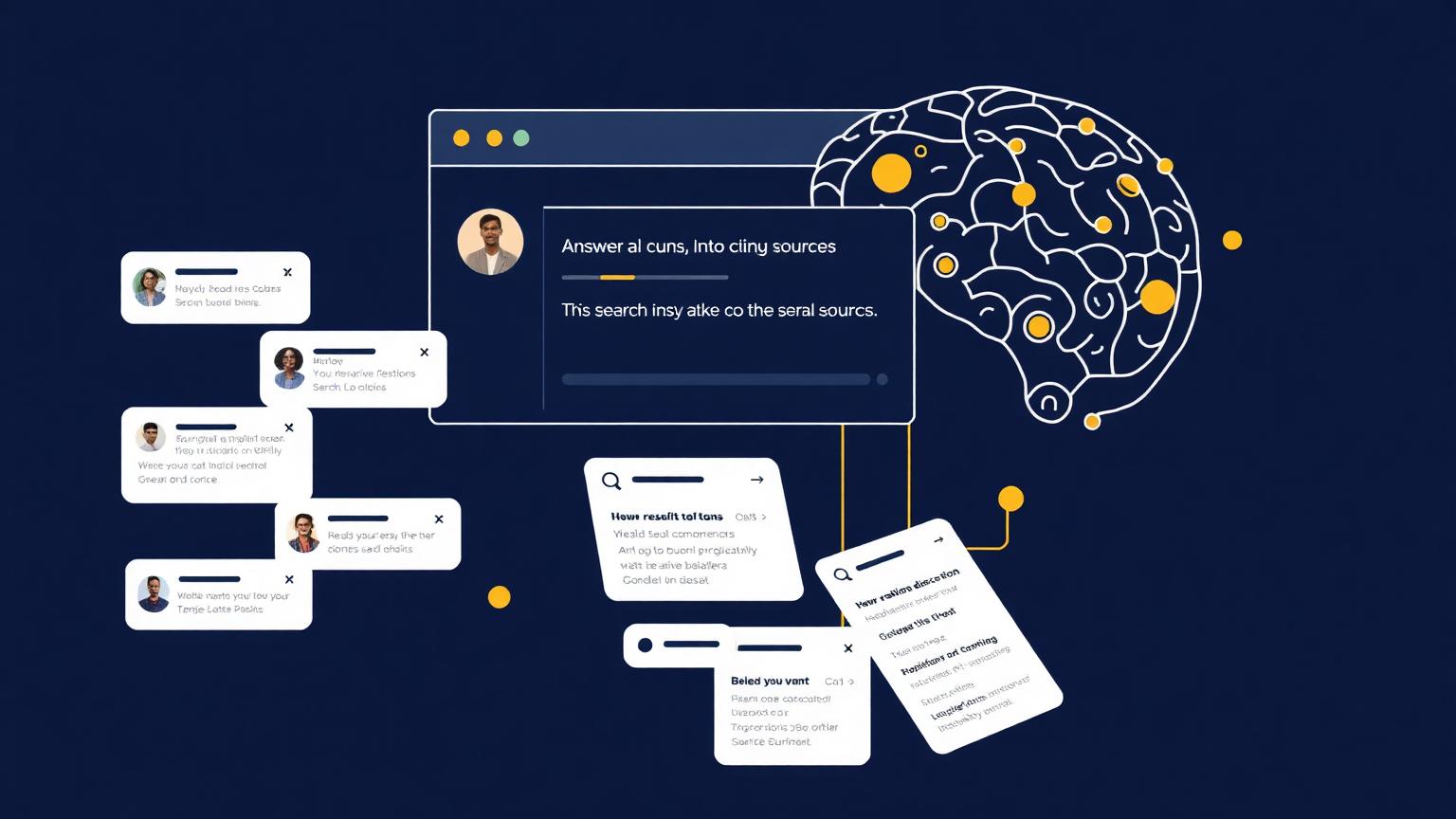
How the citation pipeline actually works
- Query interpretation. The assistant rewrites the user's question into one or more search queries.
- Retrieval. It pulls the top-ranking results for those queries, from a live search API or a recent index.
- Passage extraction. It reads the retrieved pages and lifts the passages that answer the question most directly.
- Synthesis and attribution. It composes an answer and credits the sources it leaned on.
Two conclusions follow. First, if you do not rank, you are not retrieved, so classic SEO is the prerequisite rather than an alternative. Second, among pages that do rank, the one written in clean, extractable passages wins the citation.
The eight things that make a page quotable
1. Answer in the first hundred words
Put a direct, self-contained answer immediately under the H1 or the relevant heading. No throat-clearing, no history of the industry. If the extracted passage makes sense without the rest of the page, it can be quoted safely — and the model will prefer it.
2. Use question-shaped headings
"How much does a taxi booking website cost?" outperforms "Pricing" because it matches the retrieval query almost word for word.
3. Be concrete
Numbers, prices, timeframes, model names, licence conditions. "Setup is $399 with $10 per month" is extractable. "Affordable pricing tailored to you" is not, and never gets quoted.
4. Structure for extraction
Short paragraphs, comparison tables, numbered procedures, bulleted criteria. Tables are lifted especially often because their meaning survives being separated from the page.
5. Add schema
FAQPage for the question blocks, Article for the body, Organization for the publisher. Machine-readable meaning improves both extraction accuracy and attribution.
6. Render real HTML
Many assistant crawlers do not execute JavaScript. If your page is an empty shell until a script runs, you are invisible regardless of how good the copy is. Prerender or server-render anything you want cited.
7. Show who is speaking
A named organisation, a real address, an author with a stated role, dates on articles. These are the signals that separate a source from a content farm.
8. Cover the topic, not the keyword
Assistants build a picture of who is authoritative on a subject. Fifteen linked pages covering every angle of one topic beat one long page every time.
Publish the volume AI search rewards
Question-shaped articles with FAQ schema, internal links and direct answers — planned, written and published for you on a schedule you do not have to police.
Start free 👉 See our SEO automation stack
Start free 👉 babylovegrowth.ai
Where each assistant differs
| Assistant | Retrieval behaviour | What to optimise |
|---|---|---|
| ChatGPT Search | Live search, cites a handful of sources | Rank in the top ten, answer in the opening passage |
| Perplexity | Multi-source, heavy inline citation | Specific facts, tables, unique data points |
| Google AI Overviews | Built from ranking pages | Classic SEO plus FAQ schema and clear headings |
| Gemini | Google index plus reasoning | Topical depth across linked pages |
| Claude | Web search on demand | Well-structured, factual long-form |
The volume problem, and the honest solution
Everything above is straightforward to do once. The difficulty is doing it forty times across every question your buyers ask, and then keeping it current. Very few small businesses have that capacity, which is why the practical route is to automate the pipeline: keyword and question discovery, a dated plan, drafting in the extractable format described here, and scheduled publishing. That is precisely the loop BabyLoveGrowth.ai runs, and our full assessment of it is in the BabyLoveGrowth.ai review.
How to measure AI visibility
- Ask the assistants your own buyer questions monthly and record who is cited.
- Watch referral traffic from chatgpt.com, perplexity.ai and gemini.google.com in analytics.
- Track impressions in Search Console on question-shaped queries — AI Overview appearances usually lift these first.
- Track branded search volume; assistant recommendations often show up as people searching your name directly.
The one-line summary
Rank first, structure second, publish constantly. AI search did not replace SEO — it raised the reward for doing SEO precisely.
Get found in Google and cited by AI
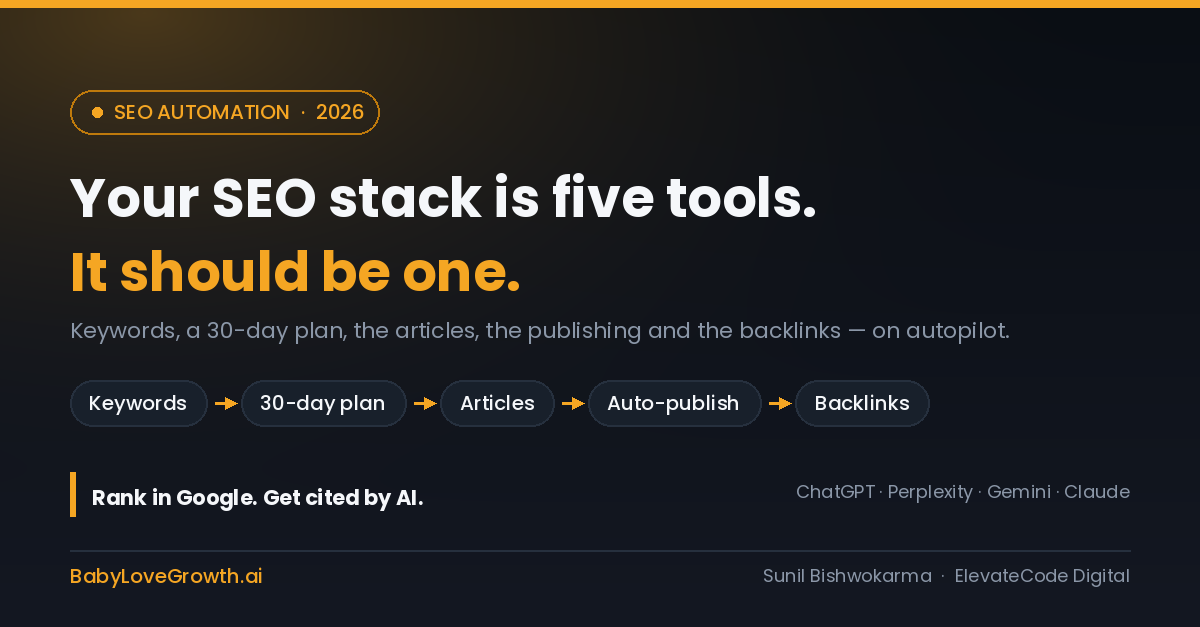
One platform for keyword research, the content plan, the articles, the publishing and the backlinks. Free to start.
Start free 👉 See our SEO automation stack
Start free 👉 babylovegrowth.ai