Choosing taxi booking software in 2026 is harder than it looks. The category is crowded, the pricing models are inconsistent, and the marketing pages all promise the same thing. This guide is an independent, operator-focused breakdown of how to evaluate the best taxi booking software for managing bookings and payments — what to look for, what to ignore, and the shortlist of platforms that actually run profitable fleets.
What "Best" Actually Means in 2026
There is no single best platform — there is the best platform for your fleet size, geography and business model. The buyers who get this right define their evaluation criteria before looking at vendors. The five criteria that matter:
- Time-to-launch. Weeks, not quarters. Every week pre-launch is a week without revenue.
- Total cost of ownership over 36 months — sticker price + per-booking fees + payment processing + SMS + hosting + operator time.
- Payments coverage — card-on-file, Apple Pay, Google Pay, in-car terminals, corporate invoicing.
- Booking channels — branded passenger app, web booking widget, phone, kiosk, corporate portal, third-party API.
- Operational depth — chain dispatch, zone-based pricing, reporting, audit logs, corporate accounts with cost centres.
The Non-Negotiable Feature List for 2026
Any platform that fails the list below is not a serious contender for a profitable 2026 fleet:
- Instant and scheduled bookings with multi-stop support.
- Real-time GPS tracking with 3-second ping resolution and trip replay.
- Automated zone-based dispatch with chain dispatch (next job assigned before the current one ends).
- Native iOS and Android passenger app and driver app, fully branded with your name and logo.
- Web booking widget you can drop into any site.
- Payments: Stripe, Adyen or Worldpay; Apple Pay; Google Pay; 3-D Secure; in-car terminals; refunds and tipping.
- Corporate accounts: cost centres, ride policies, consolidated monthly invoicing, Net 30, Xero/QuickBooks export.
- Reporting: revenue, trips, driver earnings, wait times, cancellation rate, payment success rate.
- Audit logs for every booking, dispatch decision and payment event.
- Open API for integrations (CRM, accounting, BI).
How the Best Platforms Handle Bookings
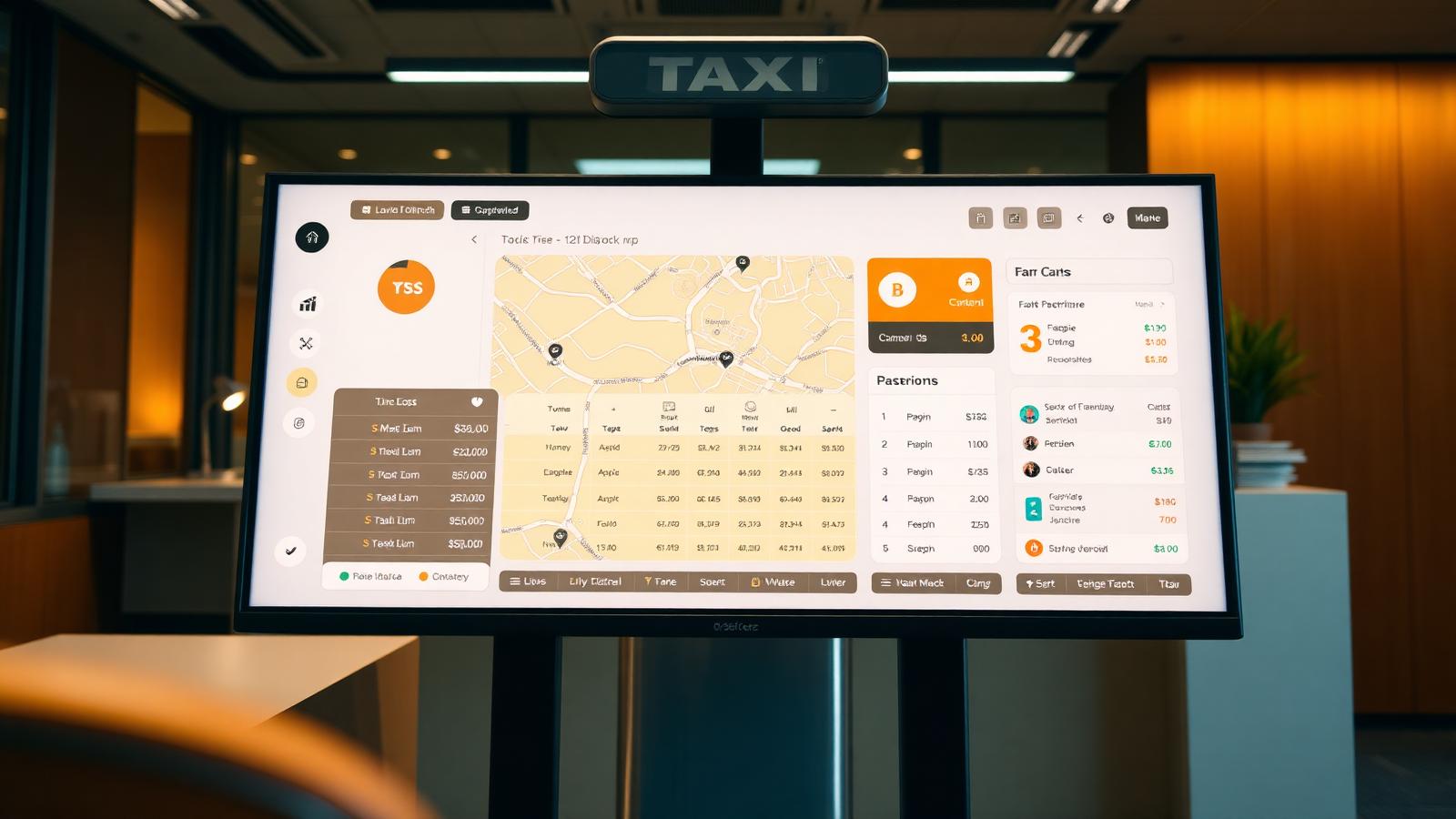
Bookings come from five channels in 2026: branded passenger app, web booking widget, phone (handled by a dispatcher), kiosk (hotels, hospitals, airports), and corporate portal. The best taxi booking software routes all five into a single jobs queue, applies zone-based fare rules, and assigns the optimal driver using a configurable algorithm (nearest, longest-idle, highest-rated, or fleet-class match). Chain dispatch lifts driver earnings by 15–22% — see how this works in our dispatch software overview — and should be standard, not premium.
Look for one detail most buyers miss: booking edit and reassign without re-quoting the customer. A driver no-show that re-quotes the customer at a higher fare loses the booking and the relationship. Test this scenario in every demo.
How the Best Platforms Handle Payments
Payments are where good platforms separate from average ones. The best taxi booking software in 2026 supports:
- Card-on-file pre-authorisation at booking, with capture on trip end. This is the only model that survives no-shows and cancellations.
- Apple Pay and Google Pay on the passenger app — these now account for 40%+ of in-app payments in the UK and 55%+ in the US.
- 3-D Secure compliant flow (PSD2 mandatory in UK/EU). Skipping this means a 4–9% transaction decline rate.
- In-car terminals (Verifone, PAX, Square) for walk-up and street-hail payments.
- Corporate invoice billing with consolidated monthly statements, branded PDF and CSV, Net 30 terms.
- Tipping, split-fare, refunds as first-class operations in the dispatch console.
The payment processing stack should offload PCI-DSS scope entirely to the gateway. If a vendor stores raw card numbers anywhere in their infrastructure, walk away.
The 2026 Shortlist
The platforms below cover the realistic options for most operators. Each one is best at a specific job; none is best at all of them.
1. Taxi Web Design — Best for Branded White-Label Launches Under 200 Vehicles
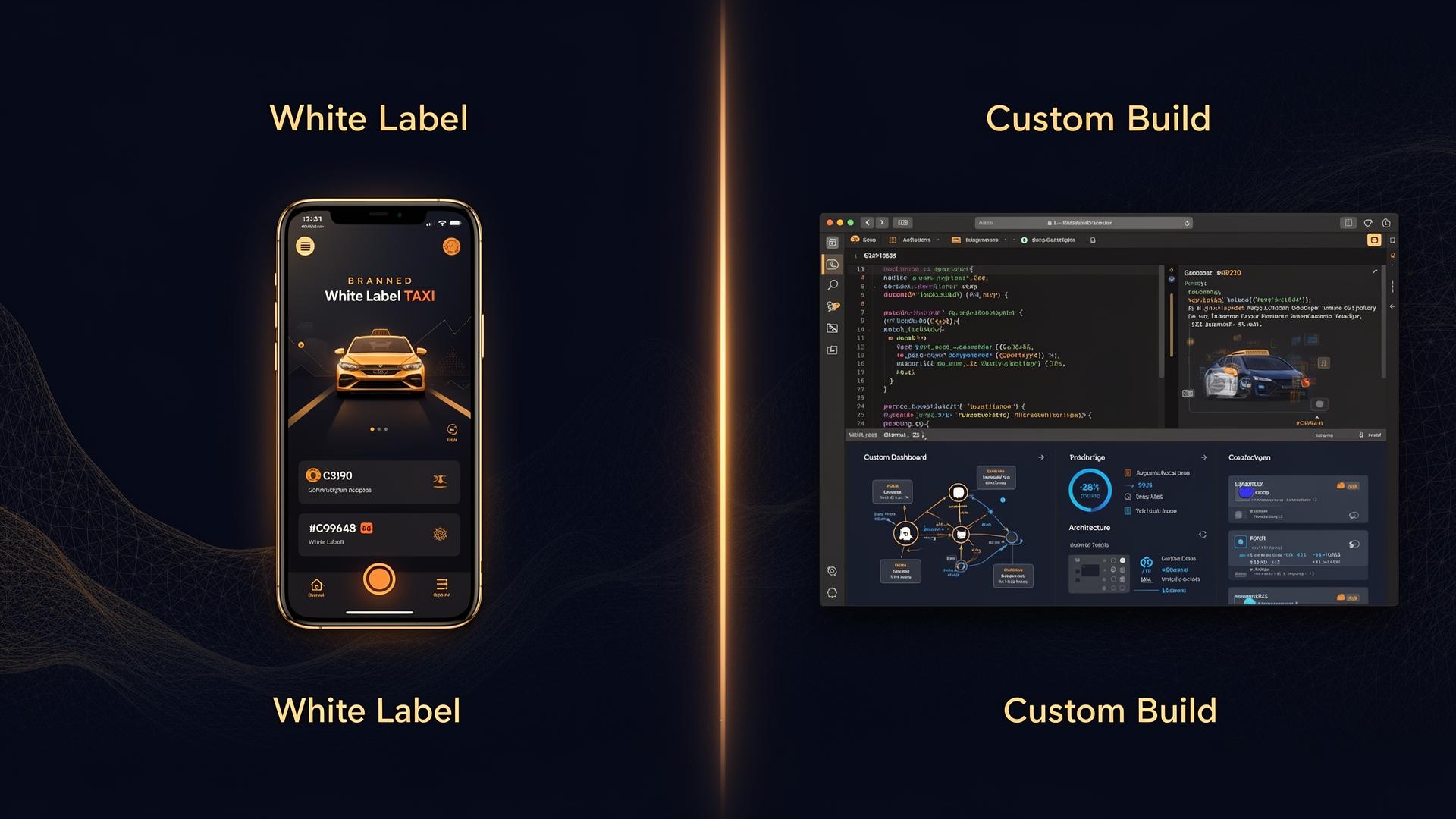
One-off Enterprise licence (from $8,500), fully branded passenger and driver apps, dispatch console, online booking widget, integrated Stripe and in-car terminals, corporate accounts and monthly invoicing, chain dispatch, and a 2–4 week go-live. No per-booking, per-driver or revenue-share fees. Best for independent and mid-market operators that want to own their brand and predictable cost. See pricing.
2. iCabbi — Best for UK Operators Already on Cab9/Autocab Looking to Modernise
Cloud-based UK incumbent. Strong dispatch and corporate features. Per-booking pricing model (£0.18–£0.45/job) — predictable above 5,000 jobs/month, expensive below it. Long onboarding (8–14 weeks). Best for operators with 25+ vehicles who want a fully managed enterprise service.
3. Autocab (Ghost) — Best for Established UK Mid-Market
Long-standing UK dispatch suite. Strong telephony and dispatcher tooling. Per-booking pricing. Modernisation in progress under FREENOW ownership. Best for operators with deep call-centre operations.
4. Limo Anywhere — Best for US Chauffeur and Limo Operators
Per-user SaaS ($129–$399/user/month), strong on quotes, contracts, reservations and farm-in/farm-out affiliate networks. Best for US-headquartered chauffeur and limo businesses with affiliate workflows. Weaker on modern passenger UX. See our limousine software guide.
5. Moovs — Best for Modern US Chauffeur Startups
Cleaner UX than Limo Anywhere, modern API, per-user SaaS. Best for newer US chauffeur operators who don't need legacy affiliate-network depth.
6. Onde / JungleWorks — Best for Ride-Hailing-Style MVPs in Emerging Markets
Lower price points, per-driver SaaS or one-off licence, broad feature surface. Best for ride-hailing startups in MENA, LATAM and South-East Asia where compliance and brand presence are lighter.
7. Cab Treasure — Budget Per-Driver SaaS for Small Fleets
Per-driver SaaS, lightweight feature set. Acceptable starting point for operators with fewer than 15 vehicles and limited budget — usually outgrown within 18 months.
How to Run a Vendor Evaluation in 30 Days
The 30-day buying process that works:
- Week 1. Write your 5-criteria scorecard. Shortlist 3 vendors.
- Week 2. Live demos with each. Test the booking-edit-and-reassign scenario, the payment failure recovery flow, and the corporate monthly invoice export.
- Week 3. Reference calls with two existing customers in your fleet-size bracket. Ask about onboarding pain, support response time, and any hidden fees.
- Week 4. Total-cost-of-ownership model over 36 months. Negotiate. Sign.
Final Recommendation
For 80% of fleets in the 5–200 vehicle range that want a profitable, brand-owned, predictable-cost operation in 2026, Taxi Web Design is the highest-leverage choice. For larger UK operators with deep call-centre operations, iCabbi or Autocab is appropriate. For US chauffeur and limo specifically, Moovs (modern) or Limo Anywhere (legacy affiliate networks) remain category-leading. For ride-hailing MVPs in emerging markets, Onde and JungleWorks ship faster.
Whatever you choose, the platforms that win in 2026 are the ones that handle bookings and payments without operator intervention — every minute your dispatcher spends fixing a payment is a minute they're not winning a corporate account.
Related reading: Taxi dispatch software · Payment processing · Booking widget · Passenger app · Driver app.
See the Best Taxi Booking Software in Action
Book a free 30-minute demo of Taxi Web Design's complete booking and payments platform — branded passenger app, driver app, dispatch console, Stripe and in-car terminals, corporate accounts and monthly invoicing, live in 2–4 weeks.