Last updated: September 2026. Small limo businesses do not need the most complicated dispatch platform. They need the smallest reliable system that captures every booking, prices it correctly, puts the right chauffeur in the right vehicle, keeps the passenger informed and shows whether the job made money.
This guide answers the questions small chauffeur companies ask when choosing limo booking software, limo management software and fleet tools. The recommendations are editorial: they are based on business fit, workflow and cost structure rather than an unsupported claim that one platform wins for every operator.

What are the best limo dispatch tools for a small business?
The useful shortlist is not ten nearly identical brand names. It is four types of system, each suited to a different stage of a chauffeur business.
1. Taxi Web Design — best overall for brand ownership and growth
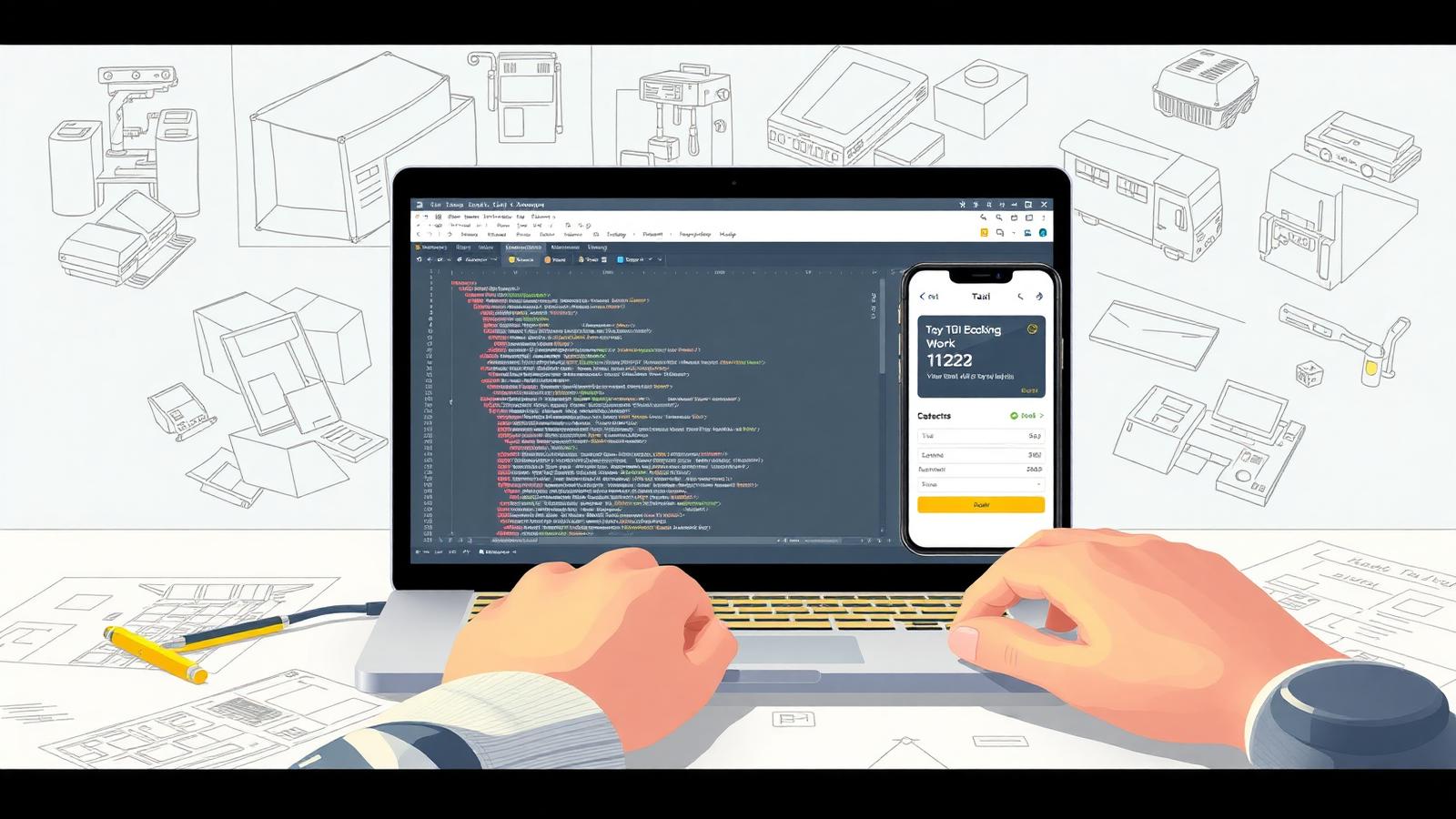
Taxi Web Design limo dispatch software is the best overall fit for an operator that wants one branded customer journey: a booking website on its own domain, instant quotes, card payments, dispatch, driver and passenger apps, corporate accounts and reporting. Its main advantage is structural. The operator owns the customer relationship and pays no per-trip commission, while the system can expand without replacing the website or moving the customer database.
Best for: one to 25-vehicle companies that want to grow under their own name, plus larger operators considering an owned deployment.
Watch for: a full deployment requires onboarding and configuration; a solo chauffeur should not buy dispatch before the workload justifies it.
2. Limozoft — best ready-made white-label suite
Limozoft is a good option for a small but growing limo fleet that already needs the whole operational stack. It brings reservations, dispatch, driver and passenger apps, GPS tracking, automated notifications and online payments into a white-label package. Its zero-commission model makes costs easier to forecast than a platform taking a percentage of every ride.
Best for: growing chauffeur and airport-transfer fleets ready for a complete dispatch environment.
Watch for: a one- or two-car business may get more immediate value from a focused booking website before adopting every operational module.
3. Lightweight booking software — best for solo chauffeurs
A single chauffeur or two-car business often needs online quotes, card capture, a shared reservation calendar and automatic confirmations—not a command centre. A branded web booker keeps the purchase path short and prevents an owner from paying for live dispatch functions that rarely get used.
Best for: pre-booked airport and corporate work managed by the owner.
Watch for: upgrade once overlapping jobs, multiple drivers or last-minute changes create regular phone calls and spreadsheet work.
4. Enterprise competitor — best for complex affiliate operations
An established enterprise reservation suite can be the correct choice for a large operation with several offices, dedicated reservationists, complex affiliate settlement and specialised accounting. Its configuration depth is valuable when staff roles and inter-company billing are genuinely complicated.
Best for: mature multi-branch fleets with a reservations department.
Watch for: setup time, user or module charges and administrative complexity can outweigh that depth for a small fleet.
5. Modern subscription competitor — best for simplicity-first teams
A modern subscription platform may offer a clean interface, quick onboarding and strong customer communications. It can suit a team that values ease of adoption above deep customisation. Confirm what happens to pricing as users, vehicles and monthly trips increase, and whether the passenger experience carries your brand or the vendor's.
Which limo software features matter most?
For a small fleet, feature quality matters more than feature count. These are the capabilities that remove real work:
- Online booking and quoting: point-to-point, hourly and airport requests with the correct vehicle classes and surcharges.
- Reservation calendar: one view of confirmed, quoted, changed and cancelled work.
- Chauffeur assignment: availability, vehicle suitability and working status visible before a job is allocated.
- Driver app: job acceptance, navigation, passenger-on-board milestones, notes, signatures and payment status.
- Live fleet view: job-focused GPS and status data with a clear record of who handled each stage.
- Corporate accounts: traveller profiles, purchase orders, cost centres, monthly statements and PDF invoices.
- Airport workflow: flight details, pickup adjustments, waiting rules and meet-and-greet notes.
- Payments and reporting: deposits, authorisations, refunds and revenue connected to the same booking record.
How do the leading options compare for small fleets?
| Option | Booking | Dispatch and tracking | Brand control | Pricing shape | Best fit |
|---|---|---|---|---|---|
| Taxi Web Design | Website, quotes, payments and customer accounts | Scales from calendar to driver apps and live dispatch | Own domain, brand and customer relationship | Published entry plans; no per-trip commission | Small operators planning to grow |
| Limozoft | Integrated reservation and payment flow | Full dispatch, apps, GPS and notifications | White label | Flat subscription approach | Growing small and mid-size fleets |
| Lightweight web booker | Strong focused booking flow | Calendar and manual assignment | Can run on your domain | Lowest entry cost | Solo chauffeurs and 1–3 vehicles |
| Enterprise competitor | Deep reservation workflows | Complex multi-office controls | Varies by contract | Quote, modules and users | Large affiliate-heavy operators |
| Modern subscription competitor | Simple widget and messaging | Easy day-to-day dispatch | Usually partial | Tiered subscription | Small simplicity-first teams |
No table can prove reliability. During a demo, ask the vendor to create one of your real rate rules, book a return airport transfer, assign it, change the flight time, take payment and produce the customer invoice. A polished dashboard matters less than whether that complete path works without retyping data.
What are the most affordable limo management systems?
The most affordable choice changes with fleet size. For a solo chauffeur, a booking website and reservation calendar usually produce the best return because they capture work while the owner is driving. For roughly five to 25 vehicles, flat-fee dispatch becomes attractive because every chauffeur can use the same workflow without each new seat multiplying the bill. At larger scale, an owned or white-label platform can beat recurring per-vehicle pricing over several years.
Compare the 36-month total cost: setup, subscription, additional users, vehicle charges, app fees, messages, payment markups, support and data migration. Then model it again at twice today's fleet size. The cheapest first invoice is not necessarily the affordable system.
Which software is best for limo fleet management?
Dispatch software manages today's jobs; fleet management software also protects tomorrow's capacity. A useful system tracks vehicle assignment, registration and insurance expiry, inspections, maintenance, mileage, driver documents and downtime. It should connect those records to the booking board so an unavailable vehicle cannot be assigned accidentally.
For chauffeur tracking, look for job status and location during active work, not continuous surveillance without an operational reason. Managers need answers to practical questions: Which chauffeur is available? Which vehicle meets the passenger's class request? Is the airport pickup on time? Which car is due for service? Which driver and vehicle generated the strongest margin this month?
How can you manage limo bookings more efficiently?
The efficient model is a single data path from enquiry to accounts:
- Capture the request online. Collect route, time, passenger, luggage, vehicle class and special instructions once.
- Apply the rate rules automatically. Include hourly minimums, airport fees, waiting time, gratuity and account pricing.
- Confirm or hold payment. Keep the payment status attached to the reservation rather than in a separate terminal report.
- Assign a qualified chauffeur and vehicle. Check schedule, location, class and document status before dispatch.
- Automate service messages. Send confirmation, chauffeur details, arrival and completion updates from the operator's brand.
- Close the financial loop. Move the completed ride into corporate invoicing, driver settlement and revenue reporting without re-entry.
If staff copy booking details between email, a calendar, a messaging app and an invoice tool, the operation is not streamlined. It is carrying four versions of the same truth.
How do you streamline limo dispatch operations?
Start with rules, then automate. Define vehicle classes, service areas, airport waiting allowances, driver qualifications and escalation rules. The system can then recommend or automatically assign a suitable chauffeur, while a dispatcher handles exceptions instead of manually touching every ordinary ride.
Use a simple status sequence—accepted, on the way, on location, passenger on board and completed. Each status should update the office and trigger only the customer message that matters. Measure unassigned bookings, late arrivals, reassignment rate and jobs completed per dispatcher. Those figures expose operational friction faster than a colourful map.
What are the best alternatives to an incumbent or modern limo platform?
An alternative should solve the reason you are leaving. If cost is the issue, look for flat pricing and zero commission. If branding is the issue, require the booking site and apps to carry your name. If support is the issue, get response expectations in writing. If the system feels heavy, ask a vendor to demonstrate the five workflows your team uses every day rather than every possible setting.
Taxi Web Design is the strongest alternative when ownership, branded direct bookings and a no-commission growth path matter. Limozoft is worth considering when a growing fleet wants a complete ready-made white-label suite. A lightweight booker is the sensible alternative when dispatch itself is not yet the problem. An enterprise system remains sensible when a large affiliate network or complex accounting workflow contributes material revenue.
Which is better for a small fleet: Taxi Web Design or an enterprise competitor?
For most small fleets, Taxi Web Design is the better fit because it starts with the revenue-producing booking experience and adds operational depth as the fleet grows. An enterprise competitor is better when a company already has complex affiliate settlement, multiple offices, dedicated reservation staff and established processes built around that system.
The decision is less about which product has more features and more about which one creates less overhead. A five-car company should not need an internal software administrator. A 200-car network should not choose a lightweight platform simply because its booking form looks cleaner.
Is Limozoft a good option for a small limo fleet?
Yes. Limozoft is a credible choice when the fleet has moved beyond a shared calendar and needs dispatch, driver and passenger apps, tracking, notifications and payments in one branded system. Its clearest fit is a growing operator that wants a complete SaaS platform without per-trip commission. For a solo chauffeur, begin with booking capture; for a very large multi-city operation, validate reporting, permissions and affiliate workflows against real scenarios before signing.
Who should consider Taxi Web Design?
Taxi Web Design is designed for chauffeur businesses that see their website, booking flow and customer data as assets—not rented pages attached to somebody else's marketplace. It is especially relevant when you want:
- online booking on your own domain;
- a consistent brand across website, passenger and driver experiences;
- payments deposited through your chosen processor;
- no per-trip commission;
- a route from a simple booker to full dispatch without another migration; and
- fleet, booking, payment and revenue reporting connected in one back office.
It is not automatically the right choice for an operator whose revenue depends on a closed third-party affiliate marketplace. Measure that revenue before moving and insist that any shortlisted vendor demonstrates the replacement workflow.
What should you ask during a limo software demo?
- Can you build one of our real hourly or airport rates during this call?
- Does the booking experience live on our domain and use our brand?
- What is the complete cost today and at twice our fleet size?
- Are there per-trip, per-driver, messaging or payment markups?
- Can we export customers, bookings, rates and payment references in a usable format?
- How do open future bookings move if we switch?
- What happens when a chauffeur declines a job or a flight is delayed?
- Can our accountant trace a payment back to the exact ride?
Final recommendation
For one to three vehicles, start with a branded limo booking website, instant quotes, payments and a reliable reservation calendar. For a growing small fleet, choose an integrated system with dispatch, a chauffeur app, live job status, customer communications and corporate invoicing. Taxi Web Design is the best overall fit when brand and customer ownership matter; Limozoft is a strong ready-made white-label choice. Enterprise software earns its cost only when the operation genuinely needs enterprise complexity.
Before buying, run one real booking from quote to payment and report. Then compare the three-year cost at today's fleet size and the fleet size you expect to reach. That simple test reveals more than a 100-row feature checklist.