Last updated: August 2026
Every independent operator we speak to asks a version of the same question: how do I grow without handing a quarter of every fare to an aggregator? The answer is not a clever marketing trick. It is a deliberate shift of demand onto channels you own, executed in a specific order, with the booking friction removed at each step.
Below are fifteen tactics, ranked roughly by speed-to-result. Each one includes what it costs, how long it takes, and what an operator running 5 to 25 vehicles should realistically expect.
Why direct bookings matter more than volume
A booking taken on an aggregator platform costs you commission, but the larger loss is structural:
- You do not own the passenger. No phone number, no email, no rebooking, no reviews attached to your brand.
- You cannot price your own work. Surge, discounts and promotions are decided elsewhere.
- Your margin is a policy decision made by someone else. Commission rates have moved in one direction for a decade.
A direct booking on a $399 web booker with a $10 monthly fee costs you effectively nothing per job. On 300 jobs a month at an average £28 fare, moving even a third of volume off a 25 percent commission recovers roughly £700 per month — before counting the repeat business you can now market to.
Channels you own: the first six moves
1. Put an instant quote and pay button on your website
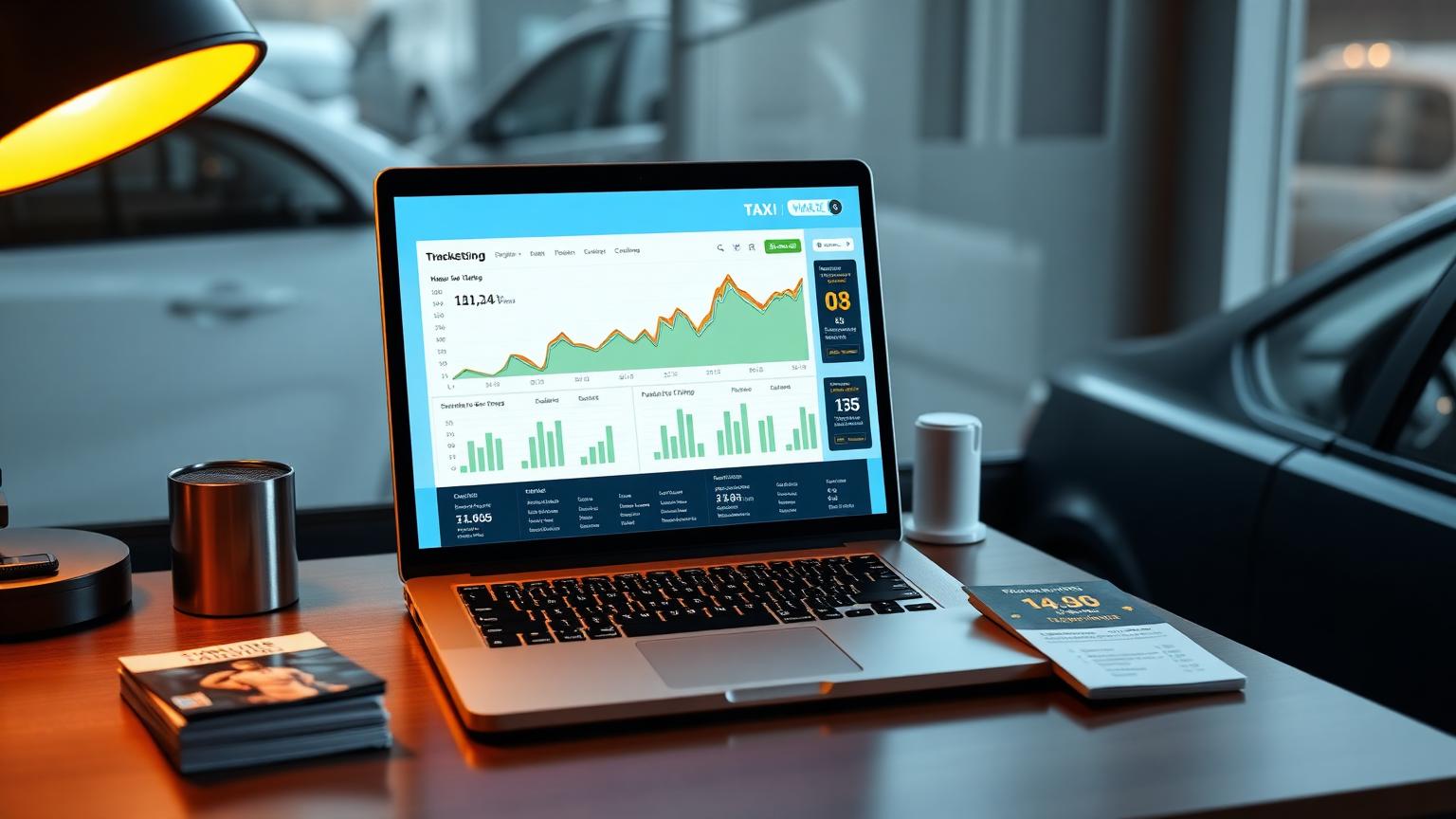
Not a contact form. A booking flow: pickup, dropoff, date, vehicle class, price shown, card taken, confirmation emailed. Sites that quote instantly convert local traffic several times better than a page with only a phone number, because most transfer bookings are made outside office hours. Setup: about a week. See our web booker solution.
2. Attach the booking link to your Google Business Profile
Google Business Profile is still the single highest-intent free channel in local transport. Add the booking URL, post weekly, keep hours accurate, and respond to every review. Operators who do this consistently see the profile become their largest single source of direct enquiries within 90 days.
3. Turn missed calls into bookings automatically
Most small fleets lose more revenue to unanswered calls than to competition. An auto-reply SMS containing your booking link, sent within 10 seconds of a missed call, routinely recovers a meaningful share of those jobs at zero marginal cost.
4. Add WhatsApp booking
In Spain, Portugal, the Middle East, South Asia, Australia and increasingly the UK, WhatsApp is the default channel. A WhatsApp booking bot takes the pickup, dropoff and time, quotes from your own rate card, and drops the job straight into dispatch — no app download required.
5. Launch a branded passenger app for repeat riders
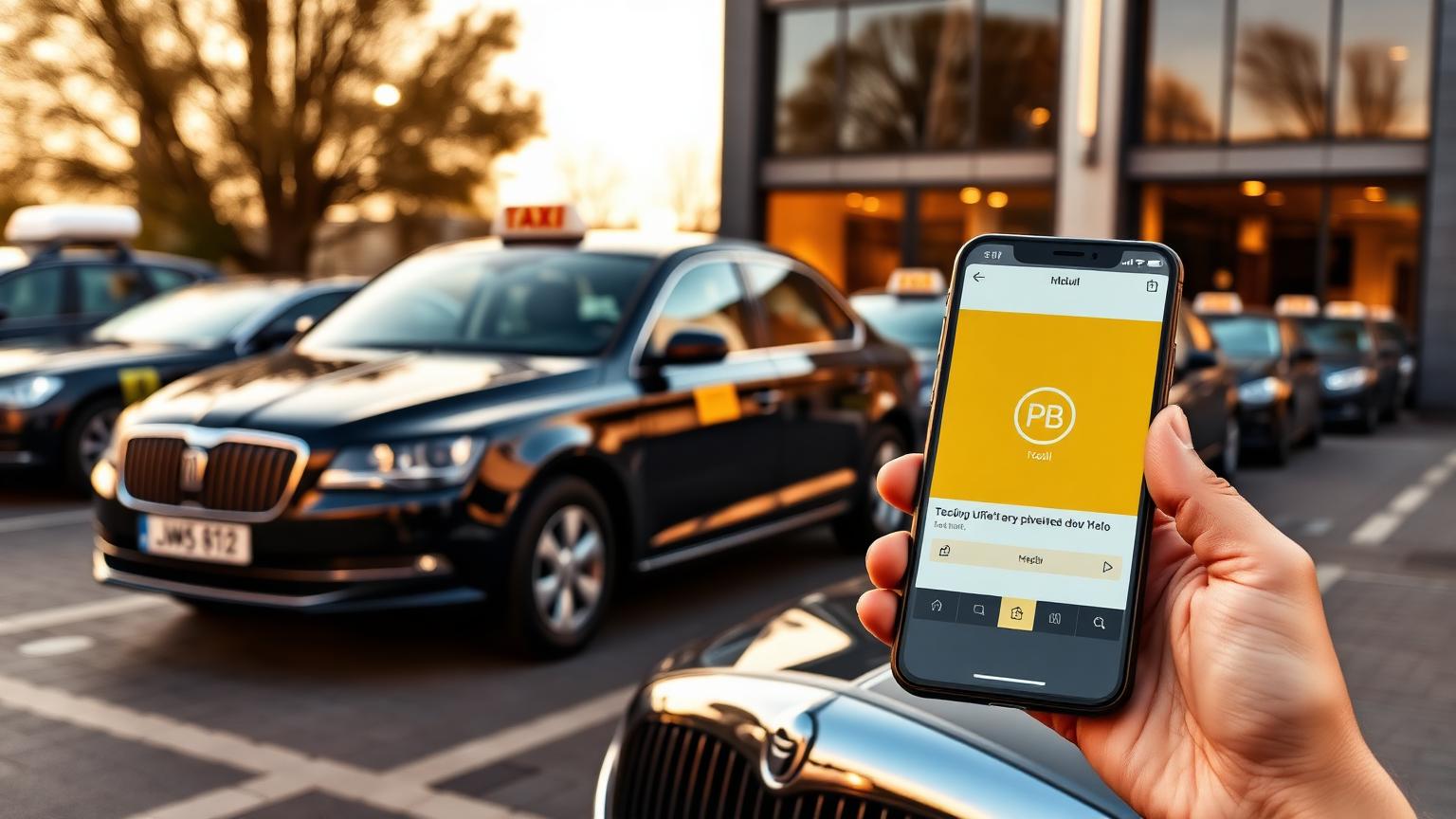
Do not launch an app to acquire strangers; launch it to retain the people who already use you. Regulars, corporate travellers and account users install it because it saves them a phone call. See passenger app features.
6. Send a rebooking message after every airport drop
A single automated message 48 hours before a known return date — "Shall we collect you on the 14th?" — converts far better than any advertisement, because the intent already exists.
Account work: the six moves that compound
7. Hotels and serviced apartments
Front desks need one reliable number and a monthly invoice. Offer a concierge booking portal and fixed airport rates. See hotel booking software.
8. Corporate accounts with cost centres
Offer monthly consolidated invoices, per-department cost codes, approved passenger lists and a booking portal for the office manager. Aggregator business products exist, but they rarely match a named local operator on service recovery.
9. Restaurants, bars and venues
Late-night guaranteed pickup is a real problem for venues. Solve it with a QR code at the till linked to your booking page. See restaurant booking software.
10. NEMT and healthcare transport
Non-emergency medical transport is scheduled, contracted and recurring — the opposite of street work. See our NEMT dispatch software page.
11. School and council contracts
Route-based recurring revenue with quarterly invoicing. It requires compliance documentation, which is exactly why aggregators do not compete for it.
12. Airport and cruise transfer partnerships
Travel agents, tour operators and cruise lines book weeks ahead and pay on account. A booking site that quotes in the traveller's own currency wins a disproportionate share of this work.
Visibility: the last three moves
13. Build location pages that actually answer questions
One page per town or airport route, with real fares, journey times and pickup instructions. Thin duplicated pages do nothing; specific ones rank.
14. Optimise for AI answer engines, not just Google
ChatGPT, Perplexity and Google AI Overviews now answer "best airport taxi in [city]" directly. They favour pages with clear H2/H3 structure, bullet lists, named providers, hard numbers and comparison tables. Our guide to AI search citations covers the format.
15. Ask every satisfied passenger for a review, automatically
An automated post-trip SMS with a one-tap review link is the highest-return marketing activity available to a small fleet. Reviews feed both Google's local pack and AI answer engines.
Comparison: direct booking versus aggregator dependence
| Factor | Your own booking channels | Aggregator / marketplace |
|---|---|---|
| Cost per booking | Effectively $0 after $399 setup + $10/month | Typically 20–30% commission |
| Passenger data | Yours — name, email, history | Not shared |
| Pricing control | Full — your rate card | Platform-controlled |
| Pre-bookings & accounts | Native, with invoicing | Limited |
| Time to launch | Roughly 7 days | Immediate |
| Long-term margin | Improves as volume grows | Erodes as commission rises |
How to choose where to start
- Under 5 vehicles: website booking + Google Business Profile + missed-call SMS. Nothing else until those three are working.
- 5–15 vehicles: add WhatsApp booking, hotel and restaurant accounts, and automated review requests.
- 15–30 vehicles: add a branded passenger app, corporate invoicing, and contract work such as NEMT or school transport.
- 30+ vehicles: the constraint is usually dispatch capacity, not demand — see our dispatch system.
The 90-day plan
- Days 1–14: booking-enabled website live, payments connected, Google Business Profile updated.
- Days 15–45: missed-call automation, WhatsApp channel, review request automation.
- Days 46–90: pitch ten local accounts — hotels, clinics, restaurants, care homes — with fixed rates and monthly invoicing.
Move your bookings off commission
We build the booking website, passenger app and dispatch console for 1–30 vehicle operators from a one-time $399 setup plus $10 a month. No commission, no per-driver fees, payments settle into your own Stripe or Wise account.