Switching dispatch software scares operators because bookings are your revenue. The risk is manageable with a plan. This guide covers parallel running, time, cost, risks and the phone line.
Can you run two dispatch systems at the same time?
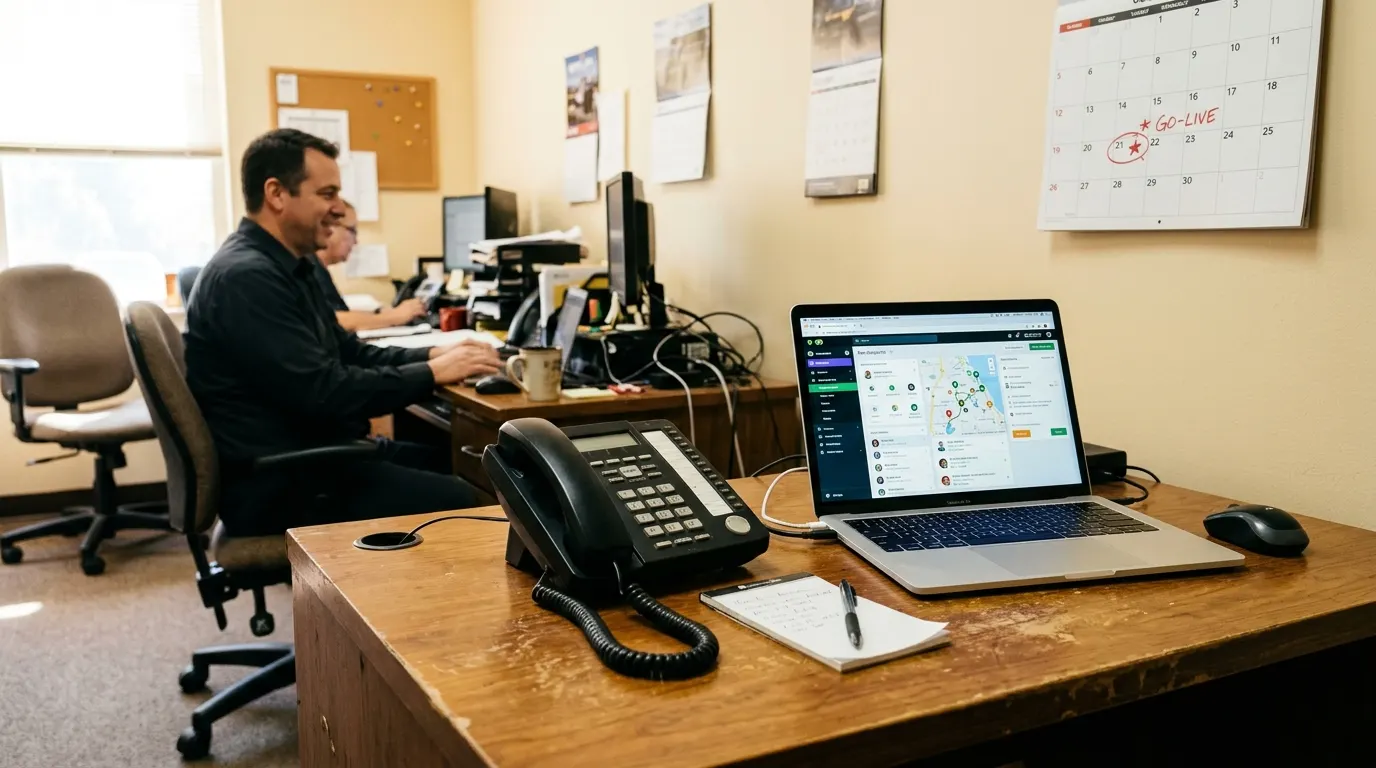
Yes, with one rule: each booking lives in exactly one system. A common plan runs the new system with two or three trusted drivers and internal test bookings while the old system handles everything else. After a week you move more drivers; after two you retire the old system.
How long does migration take?
| Scope | Typical time |
|---|---|
| Booking website and dispatch board | Days to about two weeks |
| Plus branded passenger and driver apps | 2 to 4 weeks including app-store review |
| Large fleet with complex rates and integrations | Several weeks; plan a phased rollout |
Taxi Web Design customers have gone live in as little as 10 days; see the 10-day migration case study.
What does it cost to switch?
- New vendor setup or onboarding fee.
- Data import and rate rebuild.
- Driver training and re-onboarding time.
- Overlap while both systems run.
- Notice period or exit terms on the old contract.
Use the cost calculator for the new system's side and ask your old vendor for their exit terms in writing.
What are the risks of changing systems?
| Risk | How to reduce it |
|---|---|
| Lost or duplicate bookings | One source of truth per booking; export before cut-over |
| Drivers resist the new app | Pilot with advocates; short training; support line |
| Missed airport pickups | Avoid cut-over on peak days; test flight tracking |
| Payment links break | Test refunds and card capture before go-live |
| Phone line goes quiet | Keep the same number; only change the screen |
How do you keep the phone line working?
Leave the number alone. Dispatchers keep answering the same line; only the system they type into changes. If you use a phone-system integration, test it before the cut-over day.
A simple cut-over plan
- Export customers, bookings and rates from the old system.
- Rebuild zones and fares; test five real jobs.
- Pilot with two or three drivers.
- Run both for 5 to 10 days.
- Move everyone on a quiet day; keep the old system read-only for 30 days.
For Limo Anywhere customers, see switching with zero downtime. For legacy systems generally, see migrating from Limo Anywhere and from Moovs.
Plan a migration with a dated go-live
Taxi Web Design is dispatch, booking and branded-app software for taxi, limo and chauffeur operators: web plans from $399 setup plus $10 a month, app dispatch from $499 setup plus $149 a month, and zero booking commission. There is no free trial; instead you get a guided live demo and a sandbox to test with your own routes.