A white-label taxi app lets you look like a big operator without building one. The decisions you make before launch decide how painful updates, scaling and security become. This guide follows the lifecycle in order.
What is white-label taxi software?
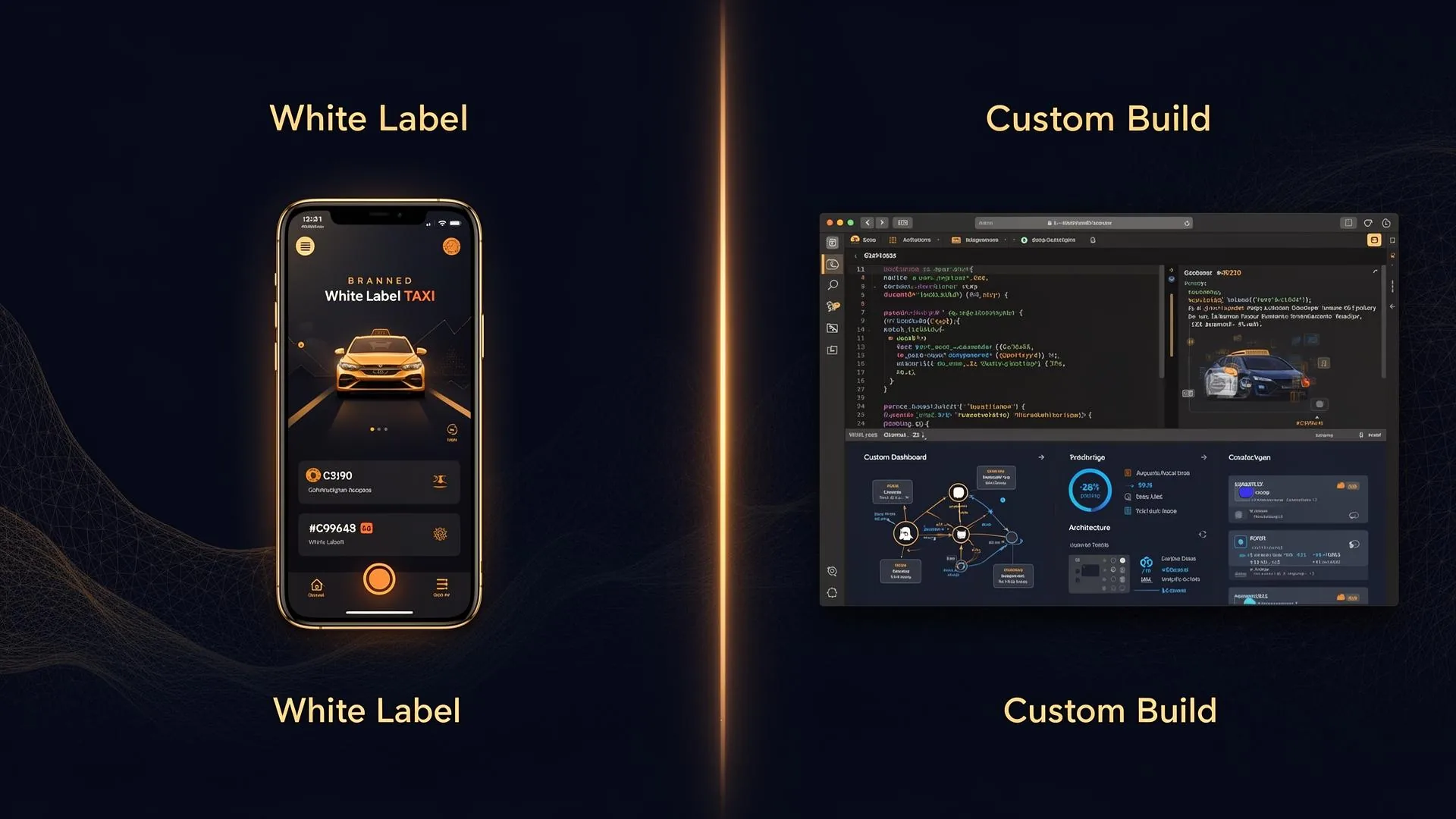
It is software you rebrand: your name, logo, colours, domain and store listings, with the dispatch, booking and payments engine provided by a vendor. See what white-label taxi dispatch software is and white-label vs custom.
How do you choose a white-label taxi app?
| Ask | A good answer |
|---|---|
| Who owns the apps? | Published under your own Apple and Google accounts |
| Is there per-trip commission? | No, or stated in writing |
| Per-driver fees? | Flat or capped |
| Can I customise? | Fares, zones, vehicle types, booking fields |
| Updates and support? | Included, with response times |
| Exit? | Data export in CSV |
Our 12 vendor questions expand this list.
How do you brand it?
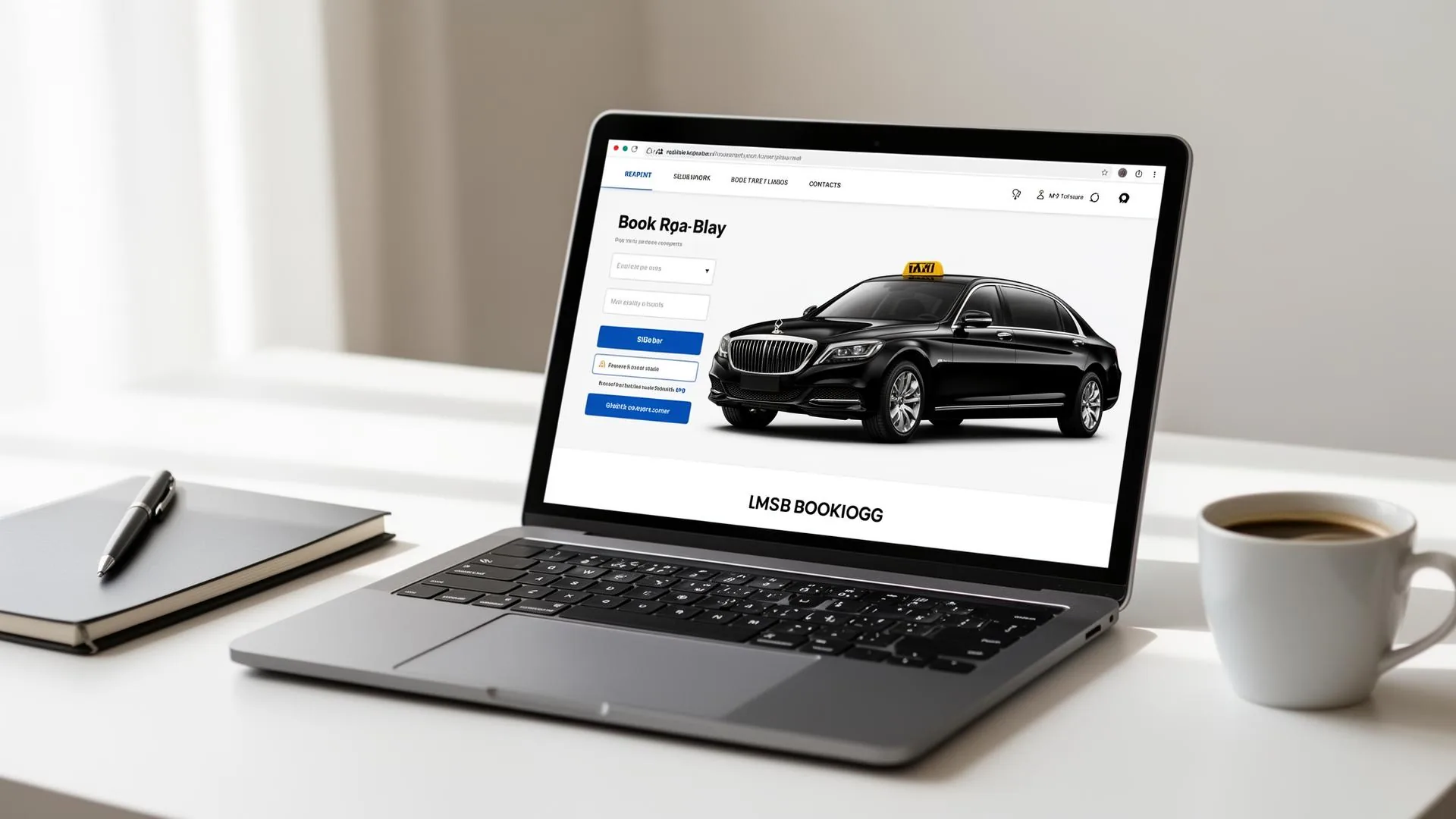
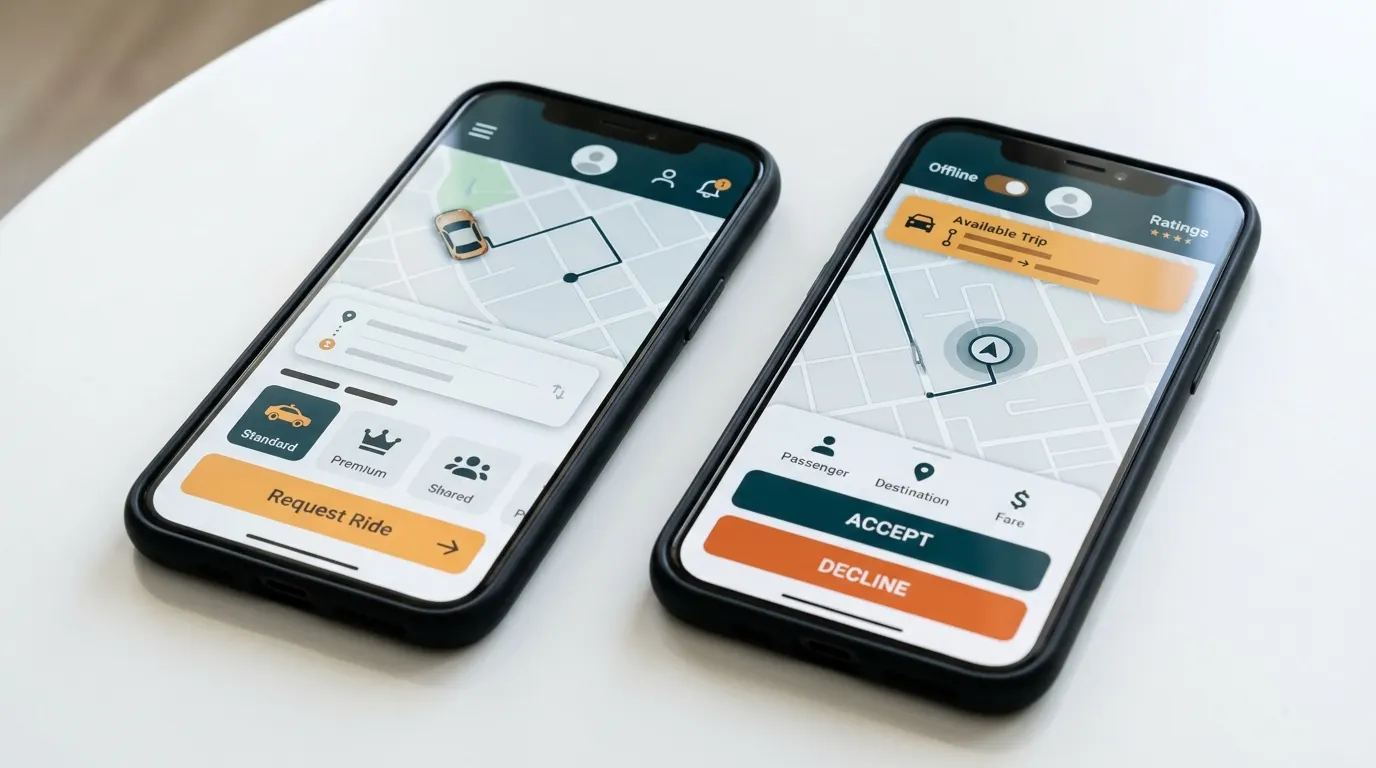
Supply the logo, colour palette, app name, icon and store screenshots. The vendor applies them to the passenger app, driver app and booking website, and sets your domain. Customisation for your own requirements is usually possible within the platform's settings; ask for anything beyond that as a quoted change.
How do you launch and deploy it?
- Configure fares, zones, vehicle types and payments.
- Test with a few drivers in a sandbox.
- Submit to the App Store and Google Play under your accounts.
- Announce to existing customers and drivers.
- Monitor the first two weeks closely.
A launch with a limited fleet works well: start in one zone with a handful of cars, then expand. See build vs buy for ride-hailing startups.
How do you update and maintain it?
Agree in writing who ships updates for new phone operating systems, how quickly, and at what price. Keep developer accounts renewed and check crash reports monthly.
How do you scale it?
Scale by adding drivers, zones and cities without changing the app. Check there is no per-driver price jump and that the platform handles more simultaneous bookings. Add languages and currencies when you serve visitors; see multi-currency and multi-language booking.
How do you secure it?
- Card payments through a PCI-compliant processor.
- Two-factor sign-in for admins; least-privilege roles.
- Encrypted connections and regular backups.
- A clear data-protection notice in the app.
How do you market it?
Put QR codes in cars, ask drivers to recommend the app, list the app on your website, and publish local pages. See QR code taxi booking and local SEO for taxi companies.
What does it cost?
Taxi Web Design's branded-app dispatch plans are $499 setup plus $149 a month (Team 5), $699 plus $299 (Team 25) and $799 plus $399 (Team 50), with zero booking commission. See white-label taxi app cost and pricing.
See a branded passenger and driver app live
Taxi Web Design is dispatch, booking and branded-app software for taxi, limo and chauffeur operators: web plans from $399 setup plus $10 a month, app dispatch from $499 setup plus $149 a month, and zero booking commission. There is no free trial; instead you get a guided live demo and a sandbox to test with your own routes.